
Patio stain diagnosis
How to remove rust stains from paving
Identify surface rust versus iron within the slab, choose a material-approved non-acidic spot remover and prevent repeat marks.
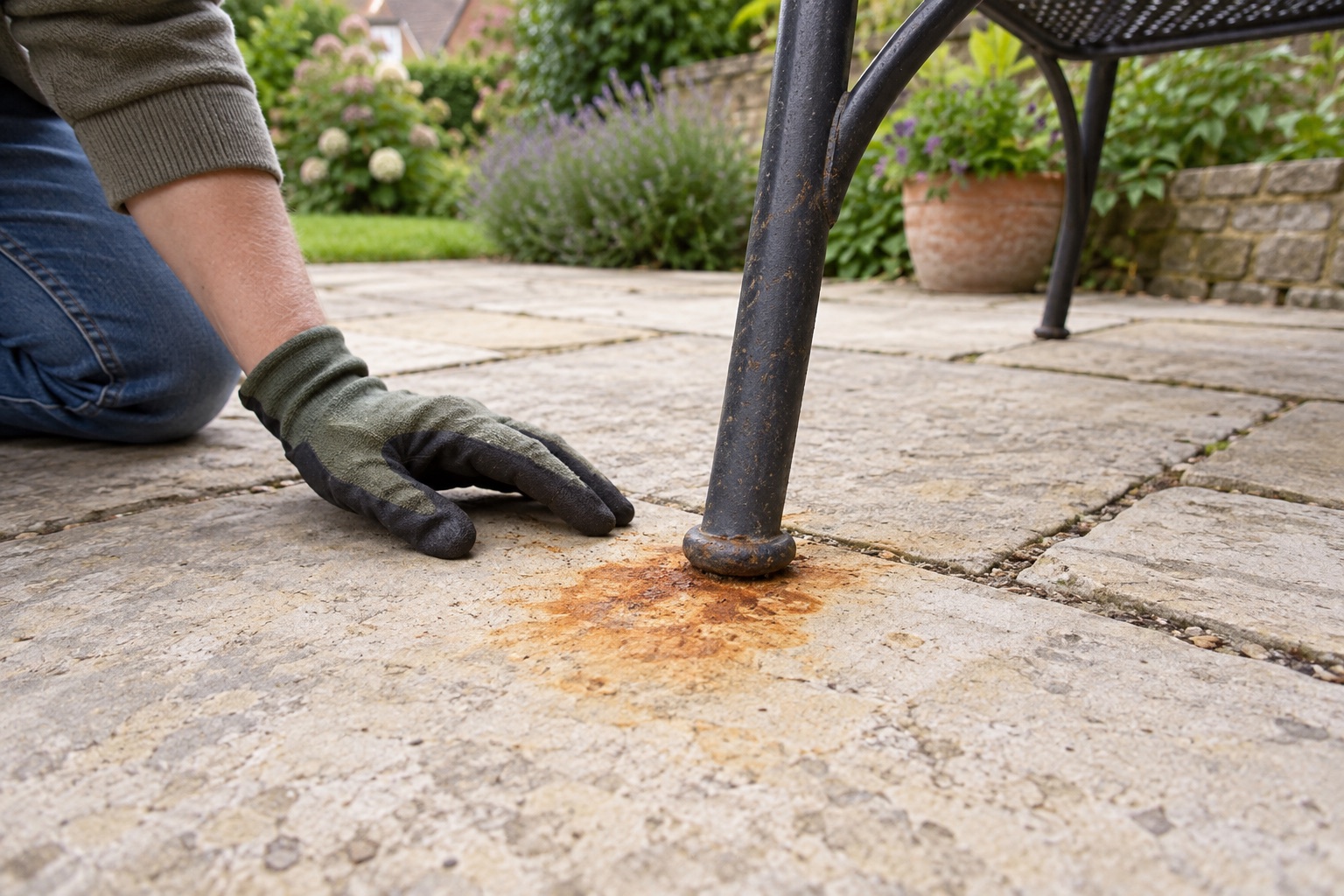
LTP distinguishes rust left by an external metal object from iron discolouration arising within some stone. Identify which kind of mark you have before choosing a treatment. Read LTP's rust diagnosis.
Surface rust or a problem within the paving?
A sharply bounded orange ring below a steel chair, metal planter or forgotten tool often comes from the object. If the orange patches appear repeatedly across a slab without an object above them, iron-bearing minerals within the stone may be oxidising. That distinction matters: a spot remover intended for transferred surface rust may not stop a recurring internal stain. Photograph the area dry, note its pattern and check the paving type before purchasing a treatment.
Remove the offending metal item and sweep grit away. Do not scrub with wire wool or a steel brush: they can leave more metal particles and scratch the face. Avoid vinegar, lemon juice, brick acid and generic limescale cleaner, especially on limestone, marble and other acid-sensitive surfaces. See our limestone and sandstone guidance for material-specific precautions.
Use a product for the exact paving material
LTP Rust Stain Remover is a non-acidic option the manufacturer lists for surface rust on several natural and artificial stones, including sandstone, concrete, marble, travertine and porcelain. That is not a promise that every sealer or finish will be unaffected. Read the current bottle label, test a hidden patch and let it dry fully. Apply only to the mark using the stated method and contact time, then remove and rinse residue as instructed without letting the water enter a drain or planting area.
If the first treatment leaves a faint shadow, allow the stone to dry before deciding whether a repeat is permitted. If the stain recurs from within the slab, contact the stone supplier or a suitable specialist instead of escalating to an acid-based whole-patio cleaner. A pressure washer is not a substitute for rust chemistry and may damage joints while leaving the orange stain.
 View product on Amazon
LTP Rust Stain Remover 250ml
Best for: Surface rust marks on natural or artificial stone approved by LTP
A non-acidic, targeted rust-stain remover for a small mark rather than a whole patio wash. Identify the paving and test an inconspicuous patch first.
For surface rust, not necessarily iron oxidising inside a slab; follow the current application and rinse label.
- 250 ml
- Non-acidic
- Spot application
- Patch test
Prevent the next stain
Fit non-staining feet beneath metal furniture, lift planters clear of the paving and store iron tools elsewhere. Check whether fertiliser granules or irrigation water are introducing iron. Keep the patio drained and clear of debris without saturating delicate stone. If staining seems to originate within the stone, a specialist may suggest a material-appropriate protective treatment only after identifying the cause; a sealer cannot fix every moisture issue.
Do not confuse rust with black spots, algae or the white salts described in our brick efflorescence guide.
Frequently asked questions
Can vinegar remove rust from paving?
It can also etch or discolour acid-sensitive stone. Use a product approved for the exact paving instead.
Does pressure washing remove rust?
Not reliably; it may damage the surface or joints. Treat the source and stain rather than increasing force.
Is a non-acidic remover safe on limestone?
Check the current label and any sealer guidance, then patch test. Non-acidic does not guarantee every finish is unaffected.
Why does rust keep coming back?
A metal object may still be staining, or iron within the paving may be oxidising when wet.
Can I use a whole-patio cleaner for one mark?
A targeted spot treatment is usually more proportionate; broad treatment increases exposure and runoff without fixing the source.