
Fault-finding guide
Why does a pressure washer pulse or surge?
Work through water flow, trapped air, blocked filters, nozzle debris and external leaks when a pressure washer pulses; learn when to seek service.
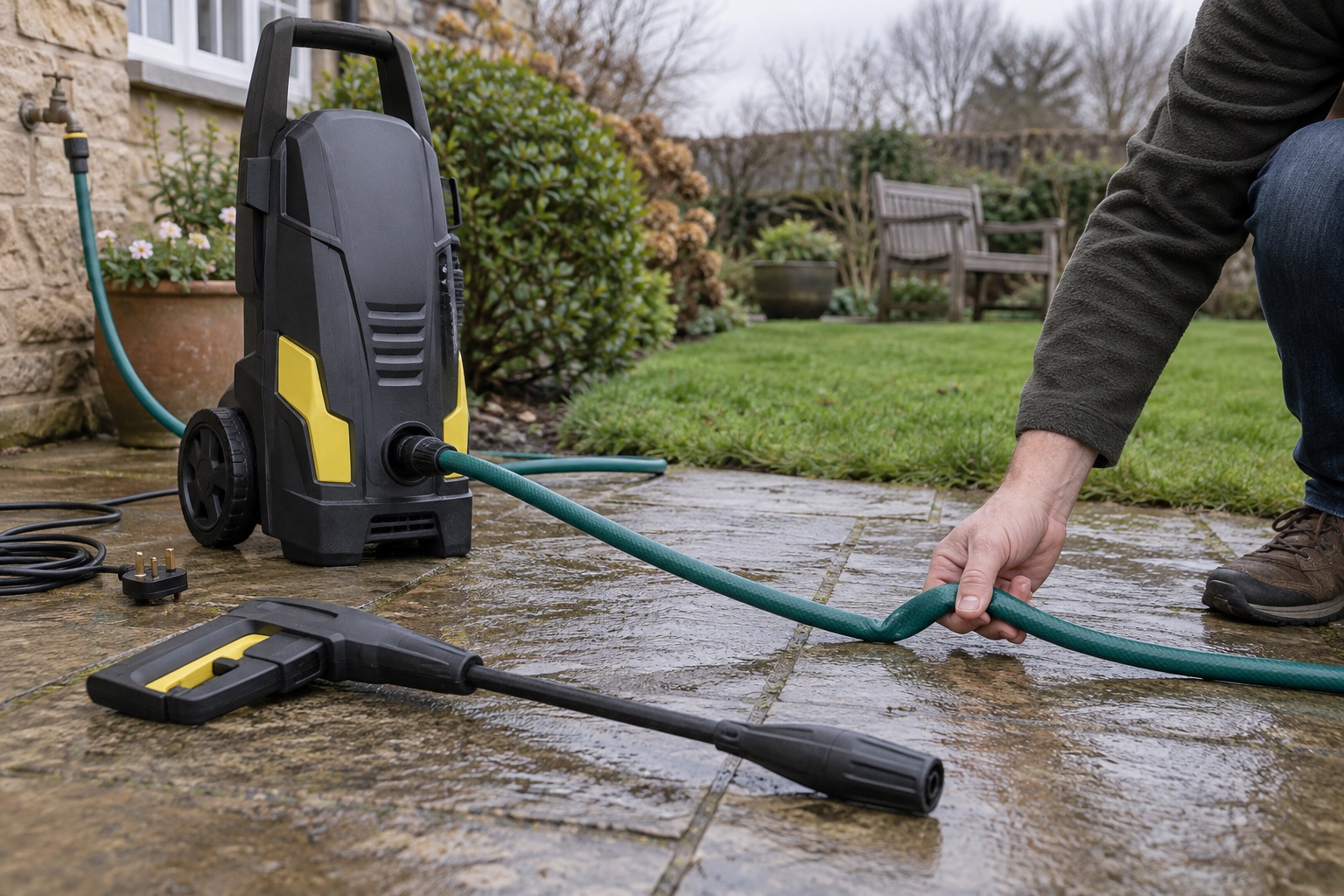
Work through the safe external checks
One external check at a time
Guided pulsing checks
Start with warning signs, then follow the external checks for this symptom. Your answers stay in this browser; this tool cannot diagnose an internal fault or approve a restart.
Your next step
Your answer will determine whether to pause, continue external checks or seek service.
Read the symptom guides →The Kärcher UK-linked Flex manual separates supply, inlet-screen, setting and air checks from service work. Its procedures and timings are model-specific. Electrical Safety First covers damaged electrics and tripped protection; HSE's injection-injury warning explains why a small-looking wound can still be urgent.
Notice when the pulsing happens
A jet that alternates strong and weak while the trigger is held is different from a motor that briefly starts when the trigger is closed. The first pattern often points to inconsistent incoming water or a nozzle problem. Uncommanded cycling at rest can indicate pressure loss through a leaking gun, hose or internal component. Neither diagnosis is certain from sound alone, so begin with the simple external checks.
Before touching a connection, complete the exact manual's shutdown, safe power-isolation and pressure-release sequence. Never loosen a high-pressure fitting under pressure, and keep hands out of the spray path.
Confirm a consistent, clean water supply
- Check that the tap is open fully and the household supply is not being heavily drawn elsewhere.
- Follow the inlet hose to the washer: remove kinks, crush points and restrictive connectors.
- Check and rinse the removable inlet screen or filter as the manufacturer directs.
- If supplied from a butt or tank, confirm the exact washer permits it and the strainer remains submerged above sediment.
- Use the model's venting or priming procedure to clear air after reconnection.
A transparent add-on filter can help protect a compatible inlet, but it can also reduce flow when dirty. The Kärcher example below is for the stated K-series range, not a universal part. Read whether an extra inlet filter is useful before buying one.
 View product on Amazon
Kärcher K-Series Water Filter
Best for: Filtering small particles from an approved water supply before a Kärcher K-series pump
A transparent inlet-side filter for the K 2–K 7 domestic range. It catches particles, but does not make dirty, chemically contaminated or unsuitable water safe for the washer.
An optional extra where the machine instructions and water source justify it; first inspect and clean any filter already built into the washer.
- Inlet side
- Part 4.730-059.0
- K 2–K 7
- Check existing filter
Check the spray end and visible connections
A partly blocked nozzle may produce an uneven fan or pressure fluctuation. Remove and clean it only after shutdown and pressure release, following the maker's permitted method. Check that the selected setting is suitable for pressure washing rather than detergent application. Look from a safe distance for dripping at the inlet or gun, and inspect the high-pressure hose visually for damage. Do not touch a suspected high-pressure leak, even when it looks like a fine mist.
If output is not merely pulsing but consistently weak, use our separate no-pressure diagnosis. If the motor instead loses power entirely, see repeated cut-outs.
Stop when the external causes are excluded
Persistent surging despite a full, steady supply and clean removable parts may involve the pump, unloader, gun or high-pressure line. Repeated self-cycling with the trigger shut is also a reason to stop. These are not invitations to adjust internal valves or test seals while powered. Record the pattern, model number and when it began, then contact an authorised repairer. If an RCD trips, switch to the electrical-safety route rather than continuing to test with water.
Frequently asked questions
Why does pressure pulse only when I pull the trigger?
Air, insufficient supply flow or a nozzle restriction are useful first checks. Shut down safely before inspecting them.
Can a water butt cause surging?
Yes, if the strainer draws air, the water is too low or the setup is not supported by the washer.
Why does the motor pulse with the trigger released?
It may be compensating for pressure loss from a leak or fault. Stop and have persistent cycling assessed.
Will a new filter always fix pulsing?
No. Clean the existing screen and confirm supply first; an extra filter may add another restriction when dirty.
Is pulsing safe to ignore?
No. Intermittent flow can stress the pump, and unexpected cycling can indicate a leak or failed component.