
Topic guide
Cars, bicycles and outdoor vehicles
Use controllable pressure and careful technique around paint, seals, bearings, brakes, decals, sensors and electrical components.
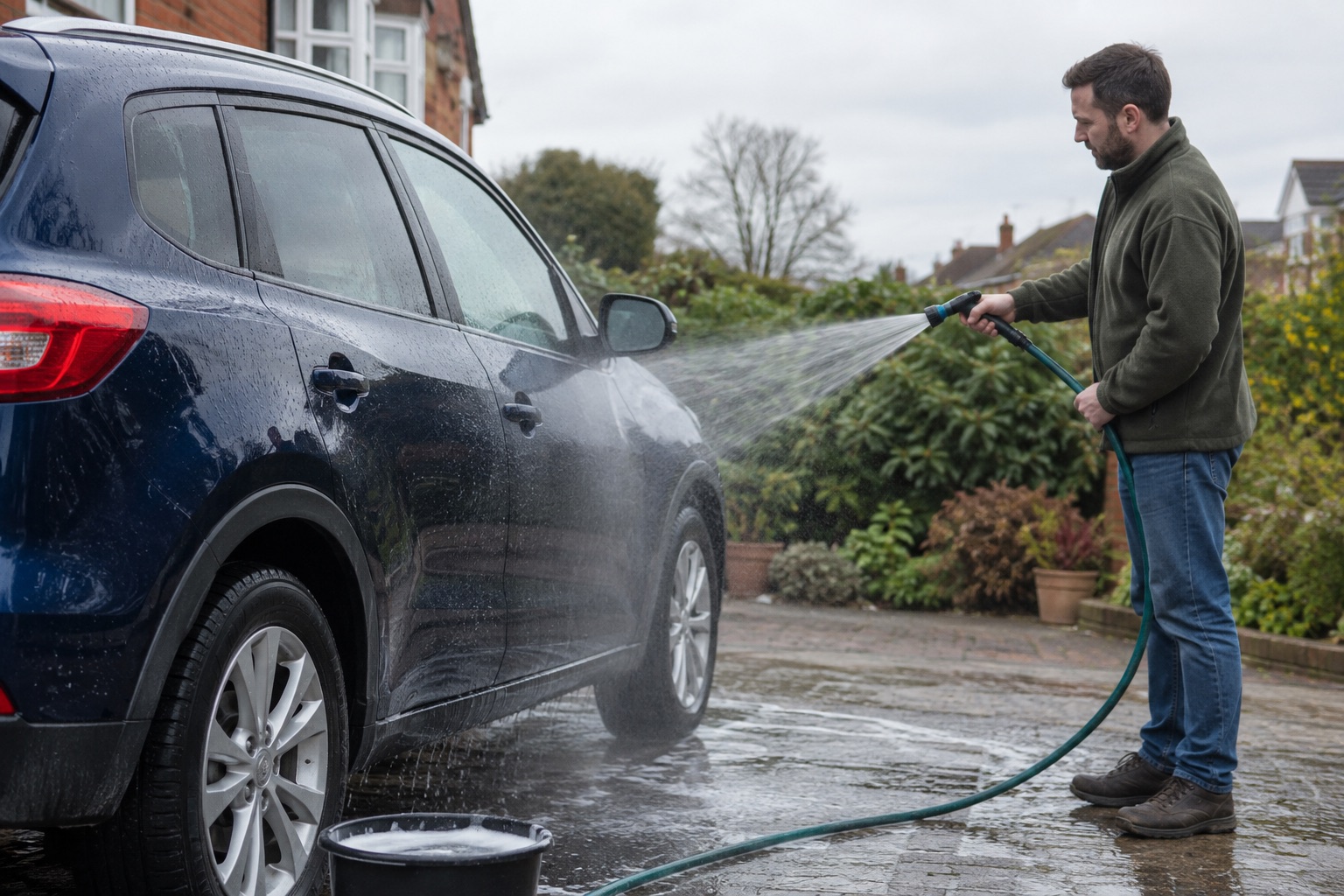
Cars need reach and restraint
Use a broad fan, begin well back from the panel and keep the lance moving. Avoid directing a close jet at damaged paint, stone chips, badges, cameras, sensors, tyre valves, door and window seals or any opening where water can be driven past a barrier.
A longer, flexible hose often improves car washing more than another step in maximum pressure. It lets you move around the vehicle without dragging the machine into the paintwork or repeatedly stopping to reposition it.
Start with the car-washing method, then check pressure and distance before comparing machines in our car pressure-washer buying guide. A wash brush can help with traffic film only after grit is removed and the vehicle maker permits contact cleaning. Keep the same lance out of the engine bay; read the engine-bay risks instead.
Bicycles favour low-pressure rinsing
Do not aim a concentrated jet at hubs, bottom brackets, suspension seals, headset bearings, electronic controls or brake components. Move mud with a gentle rinse and suitable brushes, then dry and lubricate the drivetrain as the component maker recommends.
A handheld power cleaner can be a better match than a full mains washer because portability and controlled rinsing matter more than stripping dirt at speed.
Use the bicycle cleaning method for a non-electric bike. An e-bike needs the stricter electrical-component method. Compare practical equipment formats in the power cleaner versus pressure washer guide, but follow your bike maker's restrictions first.
Caravans and motorhomes add seals, decals and height
Large panels make reach tempting, but ladders and wet working do not mix. Electrical Safety First advises keeping a stable position and avoiding ladders while using a pressure washer. Work from ground level, protect openings, and follow the vehicle maker's washing instructions for windows, seals, vents and applied graphics.
Brake dust, oil and detergent change the runoff
Surface-water drains can lead directly to the environment. Do not allow oily residue, strong cleaner or vehicle grime to run into them. Commercial vehicle washing has specific legal controls; at home, use the minimum cleaner needed and choose a location where contaminated water can be managed responsibly.
See our runoff guide for a simple drain check before washing. For bicycles, Electra's bicycle manual is one maker example; follow the instructions for your own bike and components rather than a generic pressure setting.