
Car washing method
How to pressure wash a car safely
Pre-rinse a car without damaging paint, seals or sensors. Choose a broad fan, sensible distance, car shampoo and a safe drying routine.
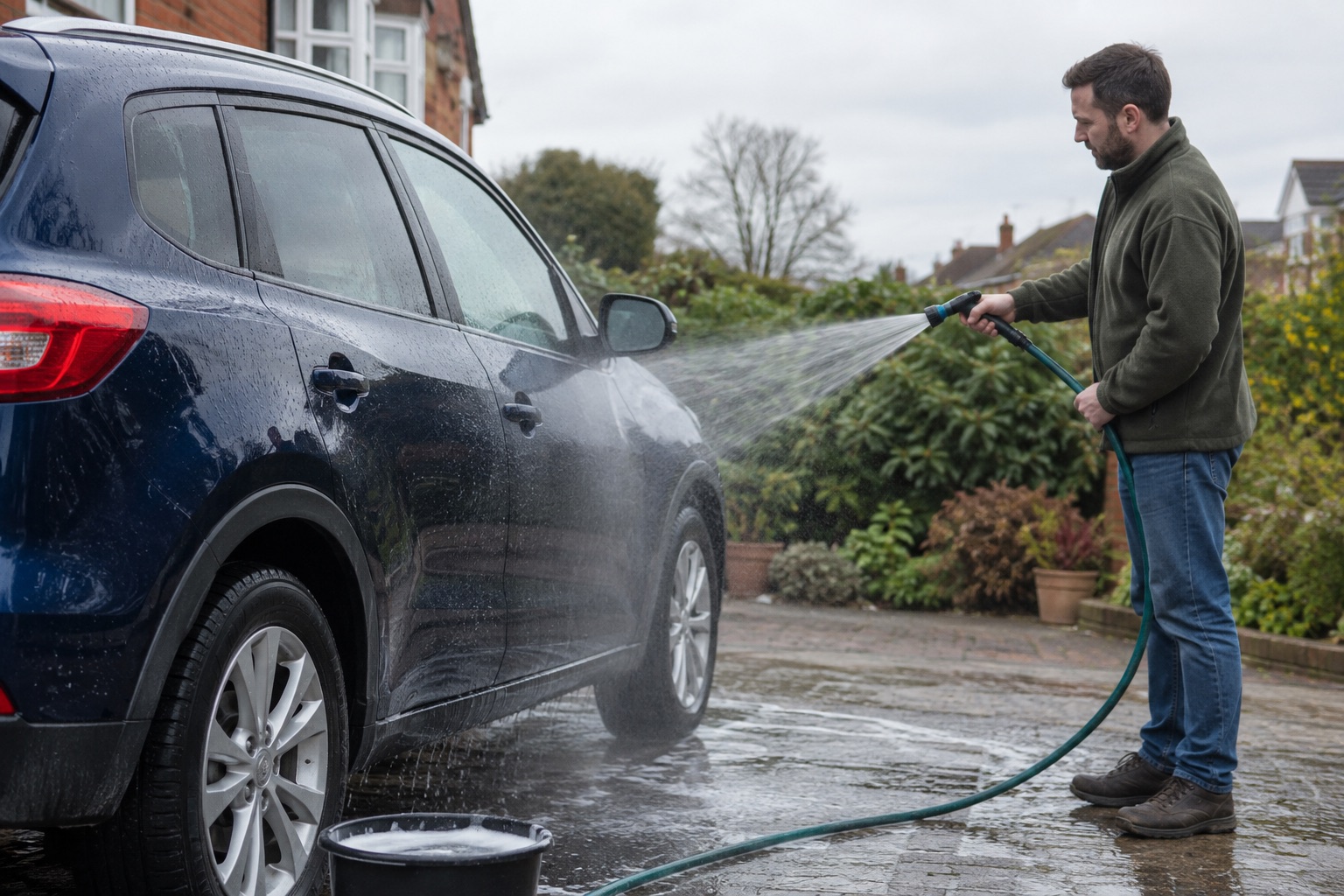
Set up for a clean, controlled rinse
Check the vehicle handbook for restrictions on cameras, sensors, wraps, soft tops, charging ports and damaged trim. Check the washer manual for a vehicle-suitable nozzle and setting. Keep the machine stable and the hose clear of paint and wheels. Close windows, sunroof and fuel or charge flaps; never spray a charge port while a vehicle is charging.
Choose shade or a cool part of the day so shampoo does not dry on the panel. If paint is chipped, peeling or recently repaired, avoid direct jetting and ask the repairer for care instructions. A rotary “dirt blaster” or narrow pencil jet is not the car setting.
A step-by-step car pressure-washing method
- Pre-rinse from a distance. Select a broad fan and low-to-medium output. Start farther away than you think necessary, then approach only within the car and washer makers’ guidance.
- Loosen traffic film. Use a vehicle-approved pre-wash if required, observing dilution and contact time. Do not let chemicals dry.
- Contact wash. Dilute car shampoo as directed and use a clean mitt with plenty of solution, working the upper panels before the dirtiest lower areas. Keep gritty wheel tools separate.
- Rinse thoroughly. Keep the fan moving across broad painted panels, away from vulnerable gaps and openings.
- Dry with clean, suitable cloths. Blot rather than dragging trapped grit. Open doors only after the exterior rinse is finished to wipe accessible water from seals.
Pressure alone does not safely remove bonded road film. Increasing force to avoid the contact wash can damage clearcoat, trim or seals. The separate pressure-and-distance guide explains how to judge the setup.
Give vulnerable parts more distance or hand cleaning
Do not aim a concentrated jet into door seals, rubber boots, parking sensors, camera lenses, badges, loose number plates, damaged paint, stone chips or wheel valves. Keep extra distance around tyres. Vehicle makers may give specific minimum clearances: Volvo’s XC40 guidance calls for sweeping movement and at least 30 cm, while Kärcher’s manual also warns against close jets on painted surfaces and tyres. Your exact vehicle and machine instructions take priority.
Do not move from exterior washing to an engine bay with the same lance. Read the engine-bay risk guide first.
Car shampoo first, controllable rinse second
Autoglym Bodywork Shampoo Conditioner is for the bucket-wash stage after loose grit is rinsed. The compact AVA Go P40 Medium is one washer option for a controllable broad-fan rinse with useful hose reach; its turbo nozzle is not for paint. Compare other formats in our car buying guide.
 View product on Amazon
Autoglym Bodywork Shampoo Conditioner 2.5L
Best for: Contact washing after a careful vehicle pre-rinse
A car-specific shampoo for the bucket-wash stage. Rinse loose grit first, dilute as directed and use a clean wash mitt instead of relying on pressure to remove bonded road film.
A useful companion to a gentle pressure washer or portable rinsing tool, not a product for patios or decking.
- 2.5 l
- Car bodywork
- Dilute for bucket wash
- Rinse after washing
 View product on Amazon
AVA Go P40 Medium
Best for: Cars, bikes and smaller outdoor areas where storage space is tight
A genuinely compact 120-bar mains washer with an 8 m flexible hose and 390 l/h flow. The small body and stored accessories make it appealing for sheds, garages and mobile car-care setups.
What stands out
- Compact body with stored accessories
- 8 m flexible hose
- Ten-year warranty when registered under AVA's terms
Keep in mind
- No surface cleaner in the Medium bundle
- Lower flow than the mid-range corded leaders here
- 120 bar max
- 390 l/h
- 8 m hose
- Mains · 1.7 kW
Finish without spreading grime or runoff
Keep dirty wheel water and oily residues from entering surface-water drains. Use the minimum vehicle cleaner needed, follow the label and local drainage rules, and do not wash where contaminated water will flow to a pond. After drying, inspect trims and seals for trapped water, and check mirrors and lights before driving.
Frequently asked questions
Can a pressure washer damage car paint?
Yes, especially with a close or narrow jet, damaged coating or the wrong nozzle. Use a broad fan and the vehicle and washer makers’ limits.
Should I pressure wash before using a mitt?
Yes, a gentle pre-rinse helps remove loose grit before contact washing. Do not use pressure to scrape bonded dirt.
Can I use a rotary nozzle on wheels?
Avoid it around tyres and valves. Use a vehicle-appropriate fan and wheel cleaner or brush approved for the wheel finish.
Can I pressure wash car sensors?
Do not aim a close jet at them. Follow the vehicle handbook and use a damp soft cloth where specified.
Is a pressure washer necessary to wash a car?
No. A hose or bucket pre-rinse and careful contact wash can work well if you keep grit away from the paint.