
Water and environment guide
Where should pressure-washing runoff go?
Understand surface-water versus foul drains, contain dirty pressure-washing water and choose a safer plan for detergent, oil and sediment.
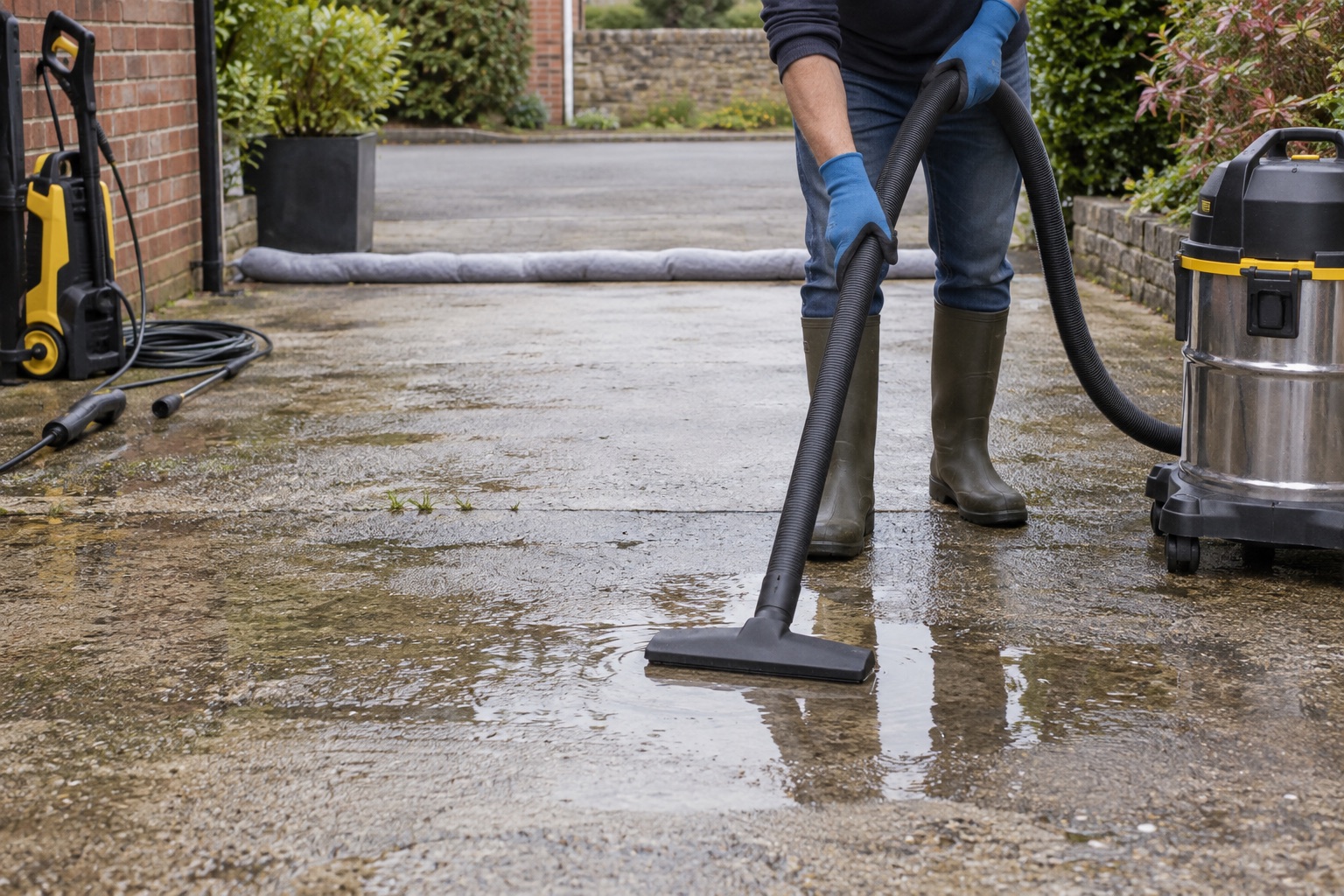
First, know where the water would travel
Surface-water drains often carry rainwater to a watercourse without sewage treatment. Foul drains serve a different system, but that does not mean you can put every chemical or oily liquid down them. Drain layouts vary, so do not guess by cover shape. If you cannot identify a drain, ask your water company or local authority before planning a liquid-heavy job. This page is practical household guidance; commercial cleaning can have additional pollution-control requirements.
Even “biodegradable” detergent, algae remover and suspended sediment can harm waterways or block drainage. Oil, fuel, paint flakes and old coatings require more care again. On a driveway sloping towards the street, the simplest protection may be not doing a pressure wash at all until you have a way to contain and collect the water.
The Northern Ireland environment department’s household drainage guidance explains how storm drains can discharge directly to rivers and beaches. It specifically warns against sending detergents, motor oil or car-wash water into them. Check your own drainage layout and local disposal arrangements rather than assuming every UK property has the same system.
Work backwards from a safe collection plan
Sweep and collect grit, leaves and moss dry first. Remove or cover items likely to shed hazardous residue. Use the least water and chemistry needed for the job, and test a small area. A suitable temporary barrier or absorbent sock can help keep a small non-aggressive spill within the work zone, but it has finite capacity and cannot magically make chemically contaminated water safe. A wet vacuum may collect appropriate shallow water only if its manual permits that liquid; never use a domestic vacuum for hazardous or flammable residues.
Keep water off the road, away from neighbours and out of ponds, soil and surface-water gullies. For oily driveways, absorb oil before introducing water. For patio treatments, follow whether the label requires rinsing or says leave-on; do not improvise. See the oil-stain guide and patio-cleaner method.
 View product on Amazon
BearTOOLS Spill Control Absorbent Socks, 2-pack
Best for: Containing a small spill of non-aggressive water-based liquid before it spreads
Absorbent socks can form part of a small contained job, but they are not a licence to wash detergent or oily runoff towards a road gully. Check the liquid, capacity and disposal route first.
Listing limits use to non-aggressive oil and water-based fluids. Do not use with hazardous chemicals or as a substitute for collecting wastewater.
- 2 × 1.2 m
- Non-aggressive fluids
- 8 l stated maximum
- Dispose correctly
What should happen to captured water?
It depends on what is in it and local arrangements. Read the cleaning-product label and ask your water company or council about the appropriate route for a small household volume; do not assume a foul drain, soakaway or garden bed is always suitable. Oil-rich or chemically contaminated water may need specialist waste handling. Keep captured debris and absorbents in suitable containers until you know the disposal route.
If runoff escapes towards a surface drain or watercourse, stop the source if safe and seek prompt advice from the relevant water company, council or environmental incident service. For businesses, the UK government's pollution-prevention guidance is more prescriptive about contaminated washwater and permissions; a professional operator should check the rules for the specific site and activity. The safest household job is one designed to avoid creating contaminated runoff in the first place.
Frequently asked questions
Can pressure-washing water go into a road drain?
Do not send dirty, detergent-laden or oily water there. Road gullies may connect directly to the environment.
Is the foul drain always safe?
No. Contents and local permissions matter. Check with the water company before disposing of contaminated washwater.
What if I use only water?
The rinse can still carry grit, oil, paint or chemicals already on the surface. Consider what it has picked up.
Are biodegradable detergents harmless to drains?
No. Biodegradability does not mean a product is safe to discharge into a surface-water system.
Can an absorbent sock replace collection?
No. It helps contain a small suitable spill but has limited capacity and must itself be disposed of appropriately.