
Fault-finding guide
Pressure washer will not start
Check a non-starting pressure washer safely, from dry socket and RCD to water supply and motor cooling, before deciding when it needs service.
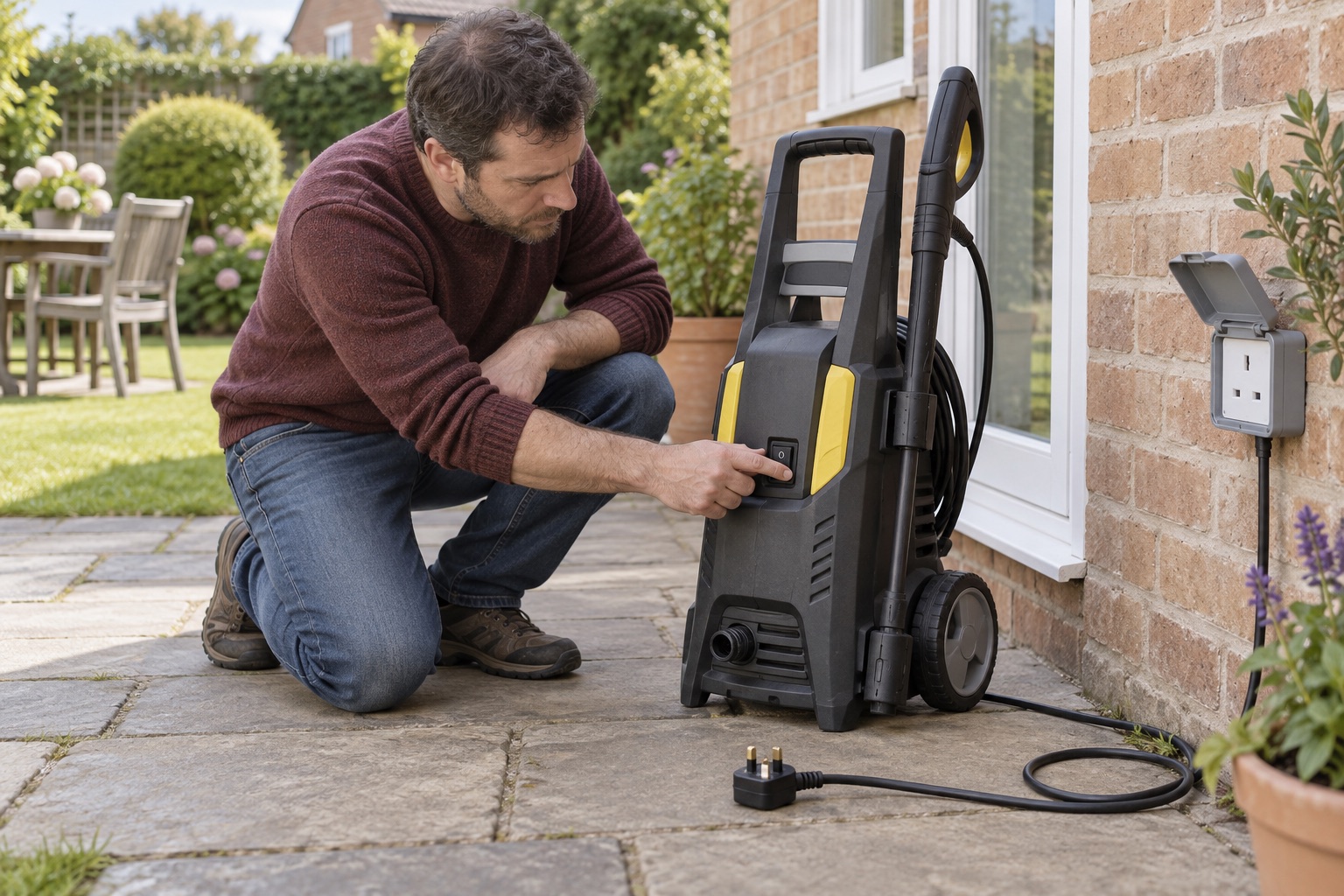
Work through safe external checks
Use the symptoms already observed. These checks keep electrical faults, suspected high-pressure leaks and uncertain isolation procedures outside the ordinary fault-finding route.
One external check at a time
Guided not-starting checks
Start with warning signs, then follow the external checks for this symptom. Your answers stay in this browser; this tool cannot diagnose an internal fault or approve a restart.
Your next step
Your answer will determine whether to pause, continue external checks or seek service.
Read the symptom guides →Follow Electrical Safety First's pressure-washer safety guidance and your exact manual. The HSE injection-injury alert explains why a pressurised-fluid injury needs immediate medical treatment.
Begin with the dry, external electrical checks
Switch off and unplug before inspecting anything. If the connection is wet, do not handle it: isolate power safely at the circuit and seek qualified help. Look for a crushed cord, damaged plug, discoloured socket or burning smell. Do not tape a damaged lead or open the washer casing.
Check whether the household circuit breaker or RCD has operated. A correctly functioning RCD can trip because of an appliance fault or water reaching a connection. Do not keep resetting it. If an extension lead is in use, compare it with the washer manual's length and conductor requirements while isolated. Do not swap outlets or remove protection to reproduce a trip. A suspect circuit or uncertain supply needs qualified help.
Confirm the operating sequence and water supply
Pressure washers do not all behave alike when switched on: some motors run only when the gun trigger is pressed, while others have a start-up cycle. Check the exact model's switch, trigger lock and assembly sequence. Attach a suitable water supply and confirm it can flow before starting; a dry test risks pump damage. A recently used machine may have operated its thermal protection, so turn it off and allow the maker-specified cooling period rather than immediately trying again.
A machine that starts but produces little pressure belongs in the no-pressure guide. A machine that starts and then repeatedly stops belongs in the cut-out guide. These distinctions help avoid buying an electrical accessory for a water-side fault.
A humming motor is a stop sign, not a cue to keep trying
A hum without normal operation can accompany low voltage at the machine, a cable issue, a frozen or seized pump, or an internal fault. Bosch's UniversalAquatak 135 manual specifically lists extension-cable voltage drop among possible causes. If the machine or supply has been exposed to frost, leave it unplugged and allow it to thaw fully in a frost-free place; do not force a start. Do not repeatedly energise a stalled motor.
The protected connection example below is relevant only where an extension is genuinely required and the exact washer manual permits its length and rating. It will not fix a faulty switch, motor or tripping appliance. Read the complete extension-lead safety guide first.
 View product on Amazon
Masterplug IP54 Weatherproof Box with 10 m Extension Lead
Best for: A correctly rated, RCD-protected outdoor electrical connection kept away from a pressure-washer spray zone
A wall-mountable IP54 enclosure containing a four-socket 10 m, 13 A extension lead. It protects the closed connection from ordinary outdoor weather, but never makes a plug safe to jet or immerse.
Confirm the washer manual permits an extension, check its load and cable requirements, fully unwind any reel, keep the box closed and off the ground, and use RCD protection.
- IP54 closed box
- 10 m lead
- 13 A rating
- Four sockets
Stop and seek service when the simple checks fail
Arrange authorised service if a sound supply and correct controls do not start the washer, the motor hums repeatedly, a fuse or RCD keeps tripping, water has entered the electrical area, or there is heat, smoke or a burning smell. Use a qualified electrician for suspected socket or circuit faults. Do not replace a fuse with a higher-rated one or dismantle a sealed appliance outdoors.
Frequently asked questions
Why is my pressure washer silent when switched on?
Check the dry socket, power protection, switch and trigger sequence. Some models remain quiet until the trigger is pulled.
Should I reset a tripped RCD?
Do not reset it to continue washing. Isolate the suspect equipment only if safe and seek qualified assessment before reuse.
Can I test the motor without connecting water?
No. Follow the manual's setup; dry running can damage the pump.
Why does it hum but not start?
Possible causes include voltage drop, frost or an internal fault. Stop repeated attempts and seek service if safe external checks do not resolve it.
Does a new extension lead fix a dead washer?
Only a proven lead or connection issue is addressed by a suitable lead. It does not repair the washer and must meet the manual and outdoor electrical rules.