
Outdoor furniture care
How to clean garden furniture
Choose the right cleaning method for wooden, plastic and metal garden furniture, including woven seats, cushions and aftercare without damaging finishes.
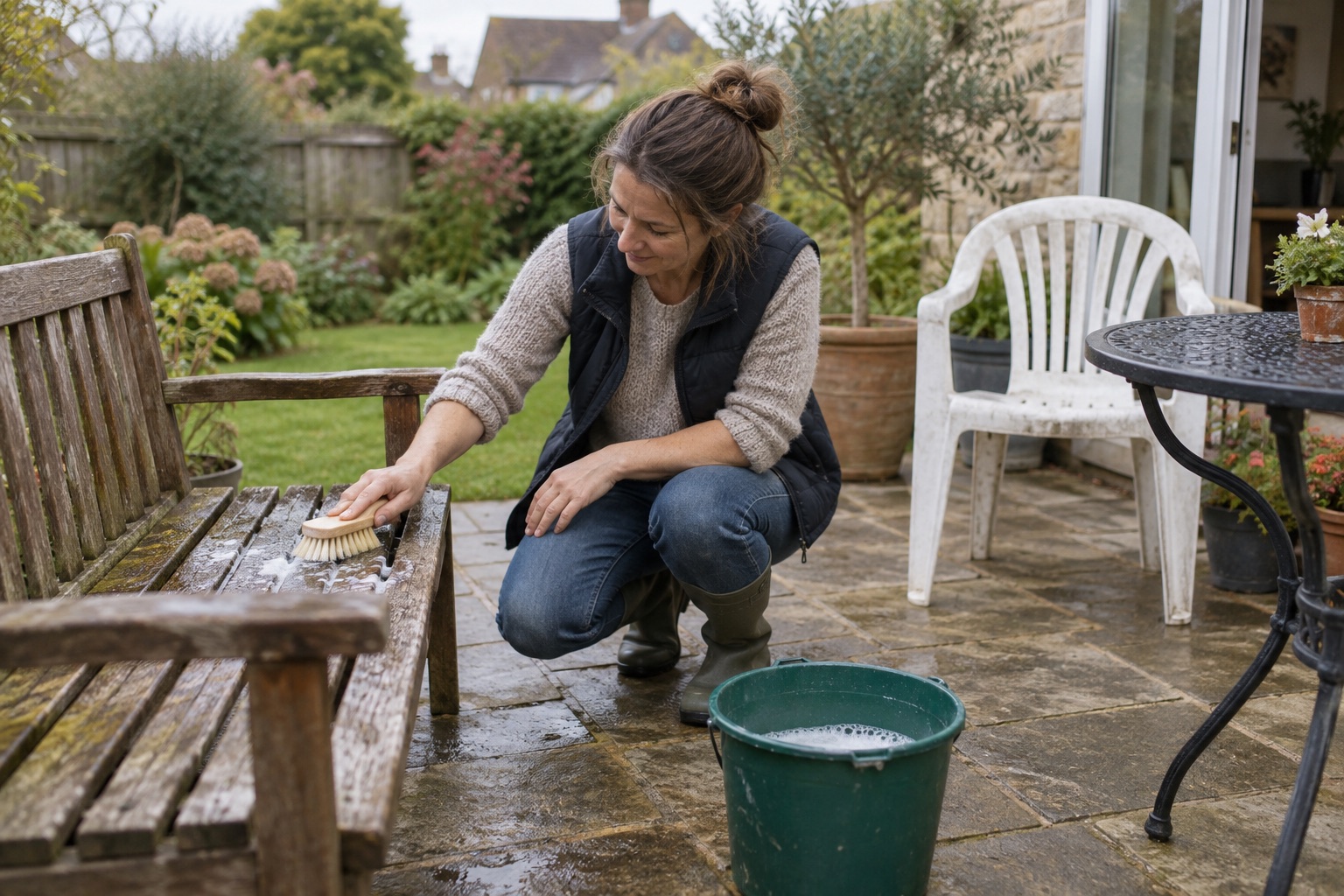
Wood, plastic and metal need different care
Begin with the furniture maker's instructions, especially for painted, oiled, powder-coated and mixed-material sets. Dirt on a chair may be simple dust, bird droppings, algae, mould or a failed coating. A cleaner can remove surface grime but cannot repair loose paint, rot or corroded joints.
Wood: use a wood-compatible cleaner and gentle brush, then let the timber dry fully before deciding whether an oil or finish is needed. Follow the wooden furniture guide for hardwood and softwood differences. Plastic and resin: use mild washing and a soft cloth; see plastic furniture cleaning for textured surfaces and yellowing. Metal: protect the coating and dry joints promptly; see our metal furniture guide.
The RHS furniture-care advice also separates material maintenance rather than prescribing one cleaning chemical for every set. If you are unsure whether a piece is solid wood, a composite or a wood-look plastic, find the product label before buying a treatment.
A safe routine for a mixed garden set
- Move cushions, loose fittings and planters into a dry place. Check stability before moving heavy benches.
- Brush off grit and leaves while dry, including under seats and around drain holes.
- Wash a hidden area with the maker-approved cleaner and a soft cloth or brush; check it after drying.
- Clean from the top down in small sections. Avoid spraying into hollow tubing, end grain and fabric seams.
- Rinse only as directed and prevent dirty water entering ponds or drains contrary to the product label.
- Dry metal joints, allow wood to air-dry completely and replace cushions only when the frame is dry.
Do not mix cleaners or use a rotary pressure-washer nozzle to speed things up. A jet can lift paint, roughen wood, force water into tubing and fray woven fibres. Even a low-pressure rinse needs a test patch and the maker's permission.
Cushions, woven seats and awkward joints
Brush or vacuum dry fabric first. Removable cushion covers may be washable, but only the sewn care label decides the temperature and whether machine washing is allowed. Air-dry inserts fully before storage to reduce musty odours. Synthetic rattan and rope seating collect grit in their weave; use a soft brush and modest water, not a hard jet. Check that water can drain from chair frames and that bolts are sound.
For winter storage, clean and dry each material before covering it. A breathable cover over a wet set can trap condensation. If growth returns quickly, improve air movement and remove leaf litter rather than repeatedly applying stronger chemicals.
Choose the product for the surface
Cuprinol's cleaner is a wood-furniture option, while HG lists several plastic and metal furniture materials. Neither is a universal answer for cushions, unsealed timber or every coating. Read the current label and spot-test.
 View product on Amazon
Cuprinol Garden Furniture Cleaner 500ml
Best for: Cleaning suitable wooden garden furniture before maintenance
A wood-furniture cleaner for weathered outdoor tables and chairs. Patch test, use sparingly and follow the container instructions before considering an oil or finish.
For the maker-approved wooden surface; do not treat it as a universal cleaner for plastic, metal or fabric.
- 500 ml
- Wood furniture
- Patch test
- Follow label
 View product on Amazon
HG Garden Furniture Cleaner 500ml
Best for: Maker-approved plastic, aluminium and coated-metal garden furniture
A furniture cleaner listed for several non-wood outdoor materials. Test a hidden patch, respect the finish and follow the label's dwell and rinse directions.
Confirm the exact furniture material and coating before use, especially around damaged paint or plated hardware.
- 500 ml
- Outdoor furniture
- Plastic and coated metal
- Patch test
Frequently asked questions
Can I use one cleaner on every garden chair?
Not safely. Check each frame, seat and finish, then choose a product that explicitly covers those materials.
Is a pressure washer safe for garden furniture?
Usually a cloth or soft brush is safer. Pressure can damage timber fibres, coatings, weave and joints; follow the maker's instructions before any powered rinse.
How do I clean garden furniture cushions?
Brush or vacuum loose dirt, follow the sewn care label for washing and dry covers and inserts completely before reuse.
Why does green growth come back?
Persistent shade, moisture and trapped leaves encourage it. Cleaning helps, but airflow and dry storage address the conditions behind regrowth.
Should I oil furniture after washing it?
Only if the wood species and existing finish call for oil. Plastic and metal do not need hardwood furniture oil.