
Limited-access guide
How to pressure wash without an outside tap
Safe, practical ways to clean cars, bikes and small outdoor areas without an outside tap, including tanks, buckets and suitable connectors.
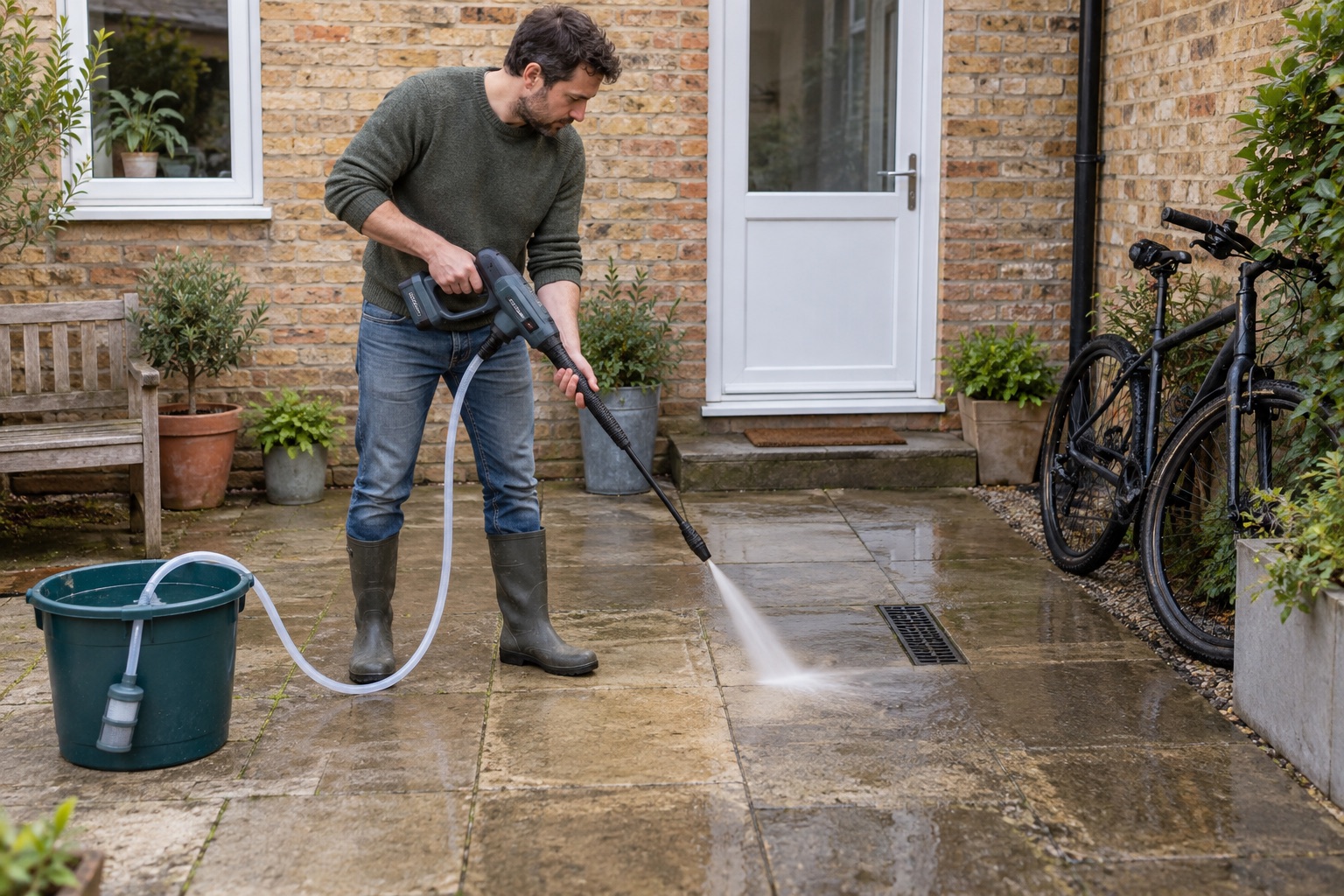
Bosch says the Fontus 18V can use its built-in 15-litre tank or a mains water connection, so it is one documented option where an outside tap is unavailable. See Bosch's water-supply options.
Choose a supported method
Tap-free does not mean water-free
Every pressure-cleaning system needs sufficient clean water. Without an outside tap, the choices are to carry the water in the machine, draw it from a container or connect to a compatible indoor supply. The safest route is the one the equipment manufacturer describes rather than an improvised adapter or open window.
| Method | What it needs | Best jobs | Main limitation |
|---|---|---|---|
| Integrated tank cleaner | Charged battery and filled onboard tank | Cars; furniture; small rinsing jobs | Limited water and heavy when full |
| Bucket-fed handheld cleaner | Clean bucket; filter; suction hose; battery | Bikes; boots; quick car rinses | Separate water container and lower output |
| Self-priming compatible mains washer | Approved suction kit and clean static source | Small-to-medium paving where model permits | Not every mains washer supports it |
| Indoor tap with suitable adapter | Compatible tap; secure hose route; permission | Occasional domestic cleaning | Leaks; trip routes; windows and doors |
Before starting, identify where wastewater will go. Road grime, detergent and loosened contaminants should not be allowed to run into a surface-water drain. Flats and shared car parks may have rules that prevent washing even when the equipment is portable.
Method one
Use a cleaner with an integrated water tank
The Bosch Fontus holds 15 litres, rolls on wheels and uses an 18 V battery. That makes the entire working system self-contained for a short session. It is suited to controlled car, furniture and bicycle rinsing rather than restoring a broad patio.
Fill close to the cleaning area where possible. Fifteen litres of water weighs about 15 kg before the machine, battery and accessories are included. Avoid stairs and uneven routes with a full tank.
 View product on Amazon
Bosch Fontus 18V
Best for: Cars, bikes and furniture where a tap or socket is inconvenient
A wheeled cordless outdoor cleaner with a 15-litre built-in tank, adjustable output and four spray patterns. Its 20-bar pressure suits controlled rinsing rather than large-patio restoration.
What stands out
- 15-litre built-in water tank
- Four spray patterns
- Up to 60 minutes quoted with the recommended battery
Keep in mind
- The selected Amazon listing excludes battery and charger
- 20 bar is not intended for heavy paved-area cleaning
- 20 bar max
- 15 l tank
- 4 m hose
- 18 V battery
Method two
Use a purpose-designed bucket-fed cleaner
The Worx HydroShot draws from a suitable clean source through its six-metre suction hose. Fit the supplied filter, keep it below the water surface and follow the priming instructions. Place the bucket where it cannot be kicked over or contaminated by runoff.
A transparent or measured container makes water use easier to judge. Refill with clean water rather than lowering the filter into silt. Stop if flow becomes intermittent; running the system dry can damage a pump.
 View product on Amazon
Worx Nitro HydroShot WG633E
Best for: Bikes, garden furniture and quick rinses where portability matters most
A lightweight handheld cleaner rather than a substitute for a mains patio machine. It draws from a bucket or other fresh-water source and delivers 38-bar rated pressure with up to 220 l/h flow.
What stands out
- 2.2 kg with battery
- Draws from a separate water source
- Five spray patterns and 6 m suction hose
Keep in mind
- Far lower pressure and flow than a mains washer
- A poor fit for large or heavily soiled paving
- 38 bar rated
- 56 bar max
- 220 l/h max
- 20 V battery
Method three
Connect to an indoor tap only with a suitable route
An indoor kitchen or utility tap can sometimes accept a manufacturer-compatible adapter. Confirm the tap shape and connector, test for leaks over a sink and route the hose without trapping it in a door or creating a trip hazard. Never leave a pressurised indoor connection unattended.
Do not route a mains extension through a wet doorway simply because the hose is already there. Outdoor electrical equipment needs an appropriate protected supply, undamaged connections and separation from spray.
Plan how much carried water the job needs
Enter your cleaner's specified flow and planned trigger time in the water-use calculator. If you enter usable container volume too, it gives a theoretical water-only runtime—not battery runtime or permission to use an unsupported suction feed.
A lower-flow cleaner may still empty a bucket quickly under continuous use. Work in stages: dry-brush loose dirt, pre-treat only when suitable, use short trigger periods and hand-wash where pressure adds little. For a car, divide the job into rinse, contact wash and final rinse rather than holding the trigger throughout.
A full patio or driveway normally needs more water than is convenient to carry. If a compliant supply cannot be arranged, hand cleaning, professional help or postponing the job may be more realistic than repeatedly carrying containers.
Compare pressure cleaners with water tanks and portable cleaning formats before choosing.
Frequently asked questions
Can a pressure washer work from a bucket?
Only if the exact model supports drawing from a static source. Use the specified filtered hose and priming procedure; do not assume every mains machine can self-prime.
Can I connect a pressure washer to a kitchen tap?
Sometimes, with a compatible secure adapter and safe hose route. Protect the indoor area from leaks and keep electrical connections away from water.
How long will a 15-litre tank last?
It depends on flow setting and trigger time. Treat it as a short-session supply rather than enough water for continuous patio cleaning.
Can I use rainwater?
Only when the manufacturer permits it and the water is clean enough for the specified filter. Sediment and biological contamination create equipment and hygiene risks.
What is the best option for a flat?
A bucket-fed handheld or tank-fed cleaner avoids permanent connections, but permission, carrying water, noise and drainage may still prevent use.