
Topic guide
Care, setup and safety
Prepare the area, separate water from electricity, protect people and surfaces, manage runoff and store the machine ready for next time.
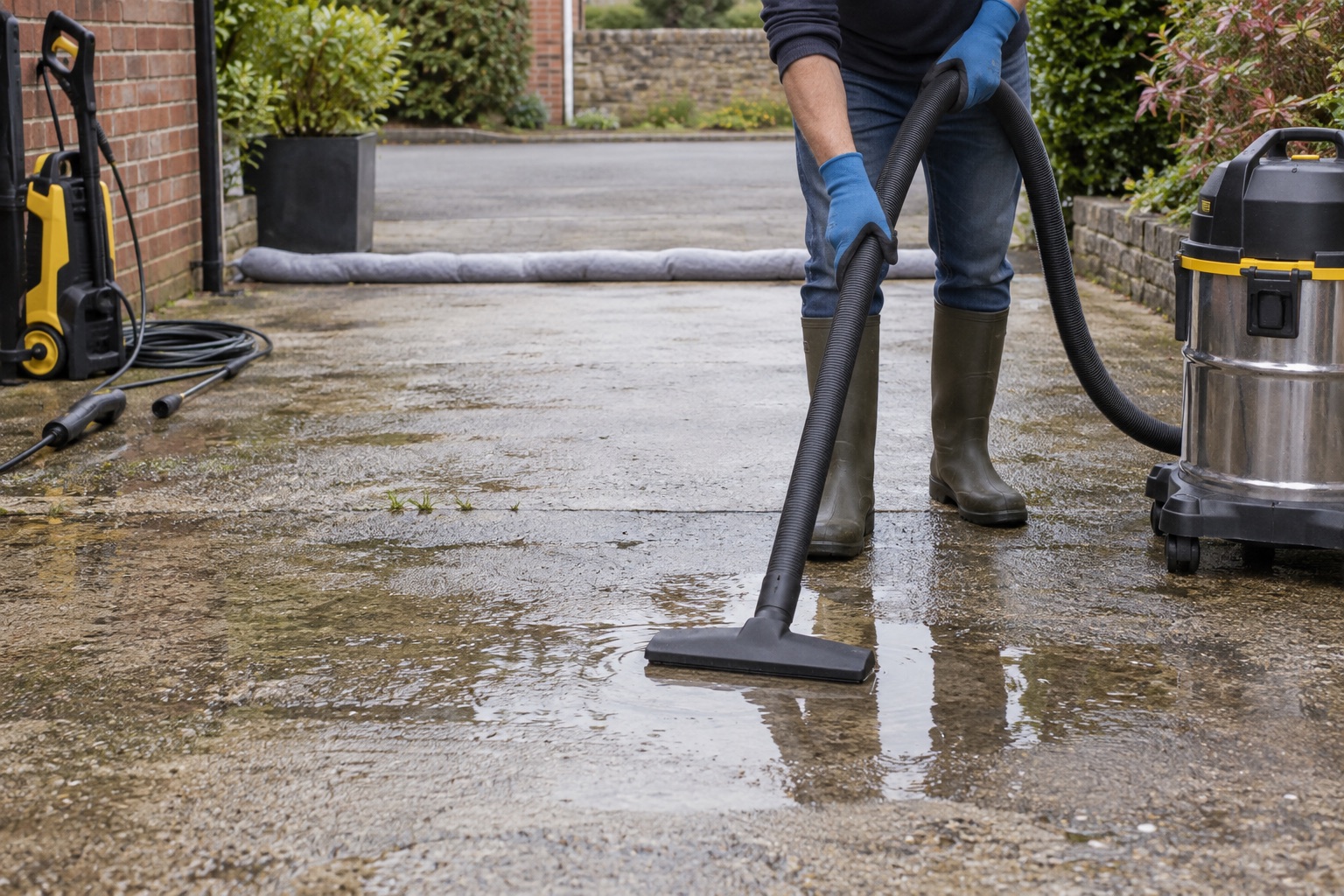
Keep the electrical side dry and protected
Electrical Safety First advises using a splashproof or waterproof outdoor socket, inspecting the full cable for damage and ensuring outdoor equipment is protected by an RCD. Keep plugs, sockets and extension connections away from spray and standing water. Stop immediately if the machine smells hot, sounds unusual or the cable becomes damaged.
A small jet can cause a serious injury
Never point the lance at a person or animal. High-pressure fluid can penetrate skin, and the wound can look deceptively small. HSE guidance on injection injuries stresses the need for prompt professional medical treatment. Do not use a hand to look for a leak in a hose or fitting.
Wear eye protection against rebounding grit, stable closed footwear and clothing suitable for the cleaner in use. Clear stones, wire and loose debris before starting. Keep children and bystanders out of the working area.
Plan the water's route before adding detergent
Clean water, loose silt, patio treatment, oil and car-wash residue are not equivalent. Surface-water drains may lead directly to the environment; keep contaminated washwater out. Identify the drains, use the minimum cleaner needed and follow its label for containment, rinsing and disposal. Read our runoff guide before a large or chemical-heavy job.
During a Temporary Use Ban, local restrictions may include washing cars, buildings, patios or decking with a hosepipe or similar device. Check your water company's current rules before beginning.
Stop when the material is unknown or unstable
Do not pressure-wash suspected asbestos cement. Do not disturb flaking old paint until its composition and the substrate are understood; Historic England notes that pre-1960s paint may contain lead. Cracked render, loose mortar, rotten timber, exposed electrical equipment and work that requires a ladder all need another plan.
Release pressure and protect the pump from frost
After use, follow the manual's shutdown sequence, release trapped pressure, disconnect the water and drain accessories as directed. Store the machine dry and frost-free. Do not improvise antifreeze or storage fluids unless the manufacturer explicitly specifies the product and method for that model. Follow the detailed winter storage checklist.
Take a task-specific checklist outside
Use the winter-storage checklist for the machine, re-sanding checklist for dry conventional block-paving joints and decking-preparation checklist before coating timber. For vulnerable materials, use the delicate-surface checklist alongside the exact material guide. Each prints without product cards or navigation and keeps its readiness and stop conditions together.