
Play-area care guide
How to clean outdoor play equipment
Clean garden swings, slides and climbing frames while checking fasteners, timber, plastic, metal and impact surfaces.
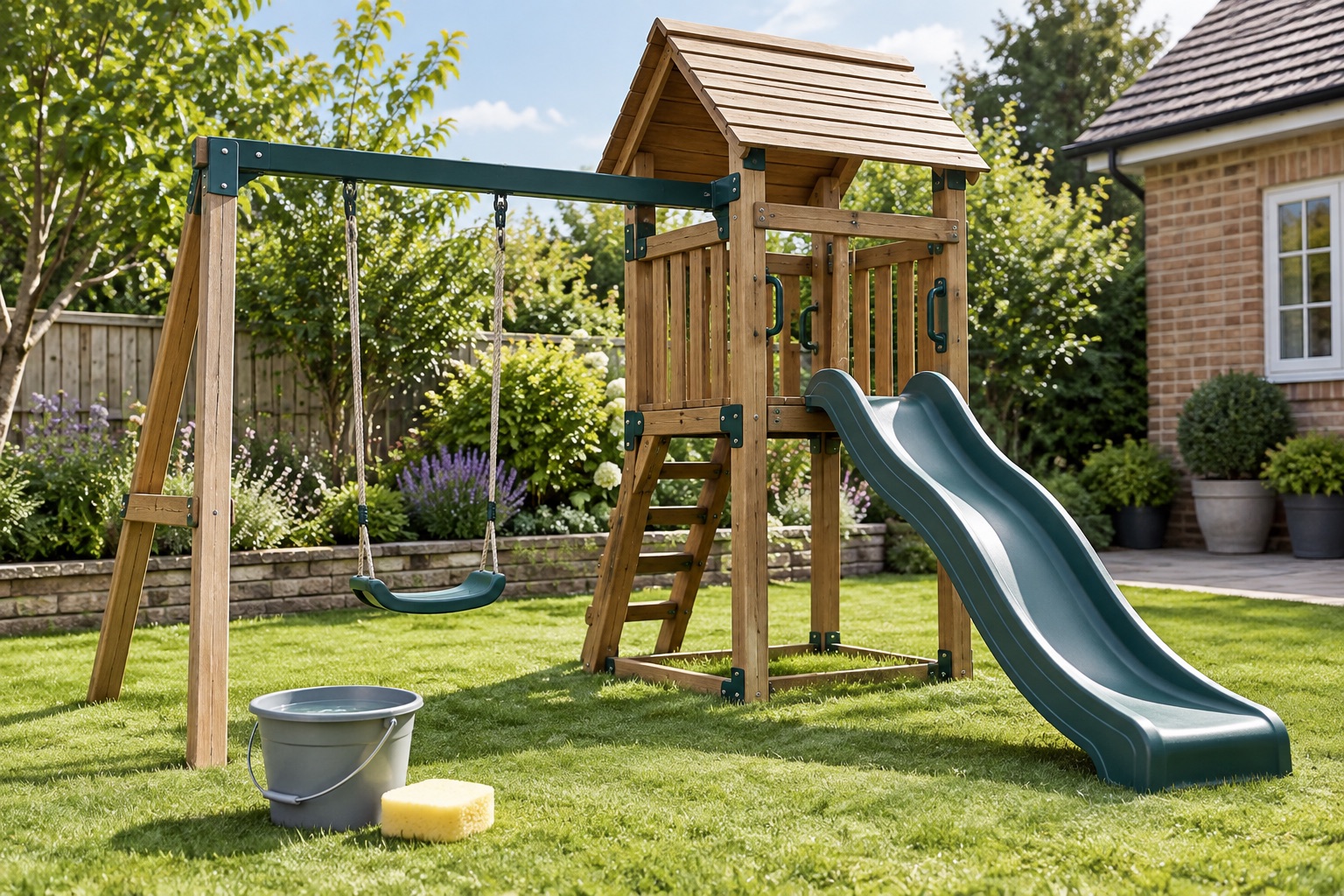
Close the play area and inspect it first
Remove toys and loose debris, then check the structure before getting it wet. Look at anchor points, bolts, swing chains, ropes, steps, slide joins, splinters, cracks and rust. Check the ground beneath for exposed concrete, loose edging, broken glass or a compacted impact surface. If a component is damaged, keep the equipment out of use until it is repaired with the maker's approved parts.
RoSPA's play-area guidance emphasises ongoing inspection and maintenance, not appearance alone. Home equipment also has manufacturer-specific instructions; keep the manual or find the maker's current care guide. Do not treat the play frame with general patio biocide while children or pets can contact it.
Choose the method for each material
Wood: brush off loose dirt, then use mild soap and a damp soft cloth or brush where the maker allows it. Do not saturate end grain, force water into joints or pressure wash a splintering board. Let the wood dry and assess any damaged finish separately.
Plastic slides and seats: rinse grit first, wash with a non-abrasive cloth and rinse clean. Avoid solvents or scouring pads that scratch the sliding surface.
Powder-coated metal: wash gently, then dry accessible seams and inspect chips or rust. A coating failure needs repair rather than more scrubbing.
Ropes and nets: follow the maker's laundering or wiping method; prolonged soaking can affect fibres or hardware. Check for fraying and replace worn parts before use.
Use a controlled rinse and protect the play area's drainage. A pressure washer can drive water into timber joints, damage coatings, lift loose surfacing and injure a bystander; it is not the default here.
Separate cloths for different jobs
The microfibre cloth pack below can help with accessible plastic, metal and final wiping. Keep a clean cloth for play-contact surfaces and a separate one for dirty hardware. It is a general cleaning aid; follow the equipment maker's material and detergent guidance.
 View product on Amazon
Amazon Basics Microfibre Cleaning Cloths, 24-pack
Best for: Separate soft cloths for low-water cleaning and drying of accessible surfaces
A multipack of reusable microfibre cloths for controlled hand cleaning. Keep clean cloths separate by task, and never drag grit across paint or electrical contacts.
Useful for careful wiping, not a substitute for a paint-safe wash mitt on gritty car bodywork.
- 24 cloths
- 40.5 × 30.5 cm
- Reusable
- Keep grit separate
Do not reopen until dry and sound
Rinse away any permitted cleaner as directed, allow timber and grips to dry, then recheck for slippery rungs or trapped water. Test moving parts without children present. Keep chemicals locked away after the job. If the fall surface is artificial grass, follow its own infill and drainage instructions; if an approach path includes outdoor steps, check those for algae and grip too.
Any structural defect, suspect anchorage or torn impact surface should keep the equipment closed until the manufacturer or a competent installer has assessed it.
Frequently asked questions
Can I pressure wash a climbing frame?
Avoid it as a default. Jets can damage wood, coating, joints and nearby impact surfacing, and create an injury risk.
What cleaner can I use on a plastic slide?
Use the slide maker's approved mild cleaner with a soft cloth, then rinse and dry it before use.
How do I clean a wooden playhouse?
Remove loose dirt, use a small amount of mild soapy water if the maker allows it and avoid soaking joints or end grain.
Can children use the equipment while it dries?
No. Wet rungs, slides and grips can be slippery; reopen only after drying and inspection.
What should I inspect after cleaning?
Check fixings, anchors, splinters, cracks, corrosion, ropes, moving parts and the condition of the landing surface.