
Slip-prevention guide
How to clean slippery outdoor steps safely
Identify algae, loose leaves, damaged nosings and poor drainage before cleaning stone, concrete or timber garden steps.
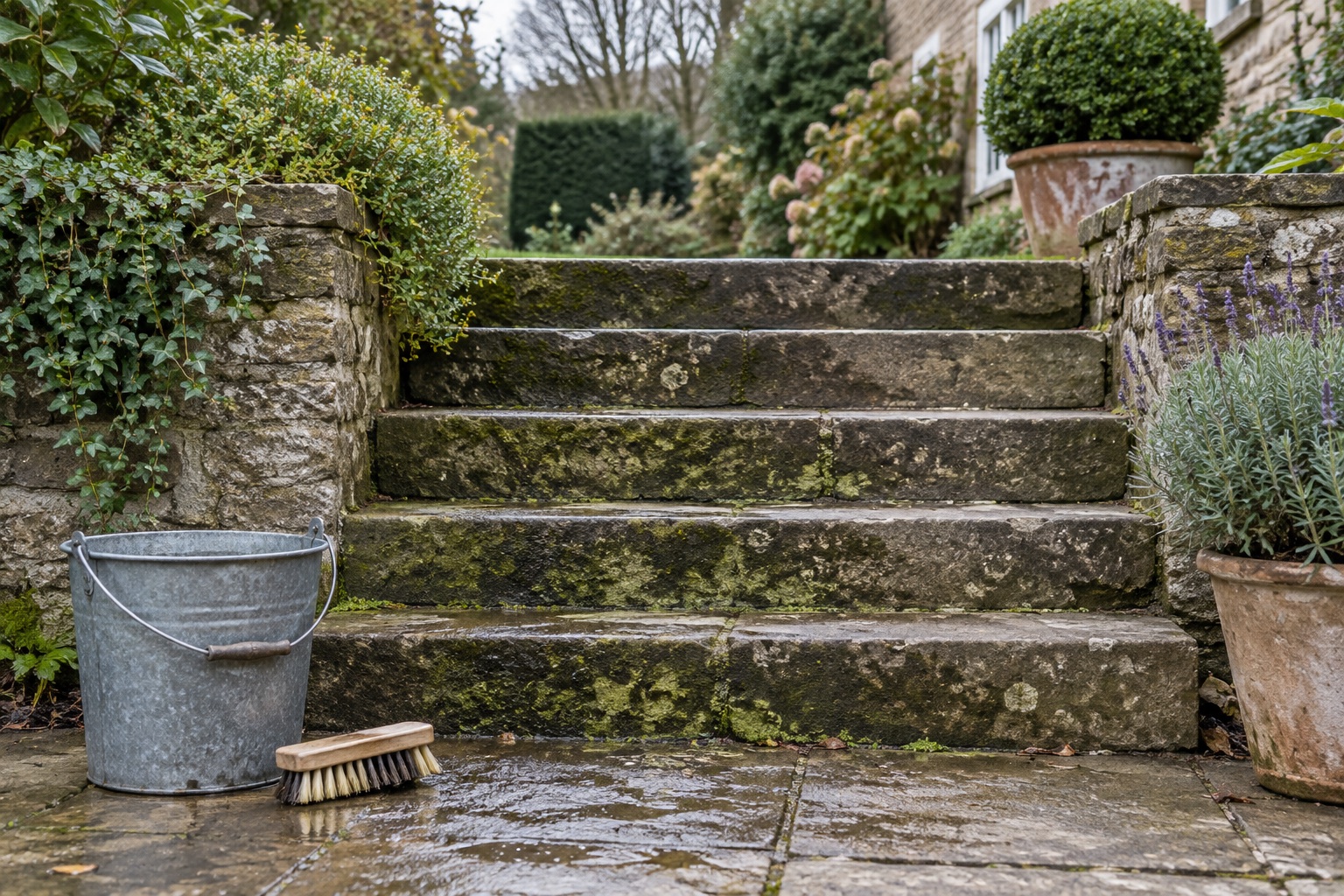
Is the step dirty, damaged or badly drained?
Green algae, moss, mud and wet leaves reduce grip, but so can a smooth worn finish, a loose tread, missing nosing or water dripping from a gutter. Inspect each tread and riser before using water. Check whether the steps are concrete, natural stone, brick, timber or composite; an aggressive brush that is fine for sound concrete can roughen soft sandstone or strip timber finish.
Use an alternative route while cleaning and keep children, visitors and pets away. HSE guidance on slip prevention notes that cleaning itself creates a hazard while surfaces remain wet. A warning sign alone does not prevent someone stepping onto a slippery tread. Work from a secure position with grippy footwear and keep tools off the stair line.
Clean from the top in small, controlled areas
- Dry-sweep leaves and grit first, collecting them rather than rinsing them down the steps.
- Test a hidden patch with plain water and the softest brush the tread maker recommends. Use a material-specific, labelled cleaner only if ordinary washing is not enough.
- Brush the tread and nosing without grinding into weak mortar or a decorative finish. Keep water volumes modest so lower steps do not become a stream.
- Collect dirty water where practical and keep it away from plants and road gullies, especially if a cleaner was used.
- Rinse as the product label directs, leave access closed until dry, then check grip in ordinary footwear. Do not rely on appearance alone.
A pressure washer may chip a step edge, dislodge mortar or leave a patchy, unexpectedly slippery finish. It should not be the automatic first choice; see our paving method only after confirming the material and condition.
Match the brush to the tread
The Newman and Cole scrubber below is a long-handled stiff brush suited to sound, robust concrete or similarly resilient treads after a patch test. Do not use it on soft, flaky natural stone, fragile pointing or coated timber. For those, a softer hand brush and the material maker's guidance come first.
 View product on Amazon
Newman and Cole Deck Scrubber Brush
Best for: Robust paving and sound timber that tolerate a stiff brush
A long-handled stiff brush for loosening surface dirt without a pressure washer. Test a small patch first; soft stone, delicate pointing and composite boards may need a gentler brush.
Use only where the surface maker permits firm brushing; protect joints and finishes.
- Stiff bristles
- Long handle
- Manual cleaning
- Test first
Keep the route usable after the wash
Trim overhanging growth, clear a leaking gutter, improve drainage and restore damaged nosings or handrails. If a smooth surface remains slippery after careful cleaning, a competent installer may need to assess a suitable slip-resistant treatment or physical repair; chemicals marketed as instant grip can change the material and may be inappropriate. Check the adjoining gravel path for stones that roll onto the steps.
Frequently asked questions
What makes outdoor steps slippery?
Algae, wet leaves, mud, ice, poor drainage or a worn tread surface can all contribute. Identify the actual cause before choosing a treatment.
Can I pressure wash stone steps?
Do not assume so. Soft stone, weak joints and edges can be damaged; start with a material-approved gentle method.
Can I use bleach for algae?
Only if a product's current label and the step material explicitly allow it, with runoff controlled. Plain brushing may be enough for light growth.
When can the steps be used again?
Only after the surface and any treatment have dried as required and grip has been checked.
What if the steps are still slippery when clean?
Investigate drainage, finish, worn nosings and lighting; a repair or specialist slip-resistance assessment may be needed.