
Bicycle cleaning
How to pressure wash a bicycle safely
Most bicycles are better washed with a bucket, soft brush and gentle rinse. Learn when a low-force cleaner is permitted and protect bearings, brakes and suspension.
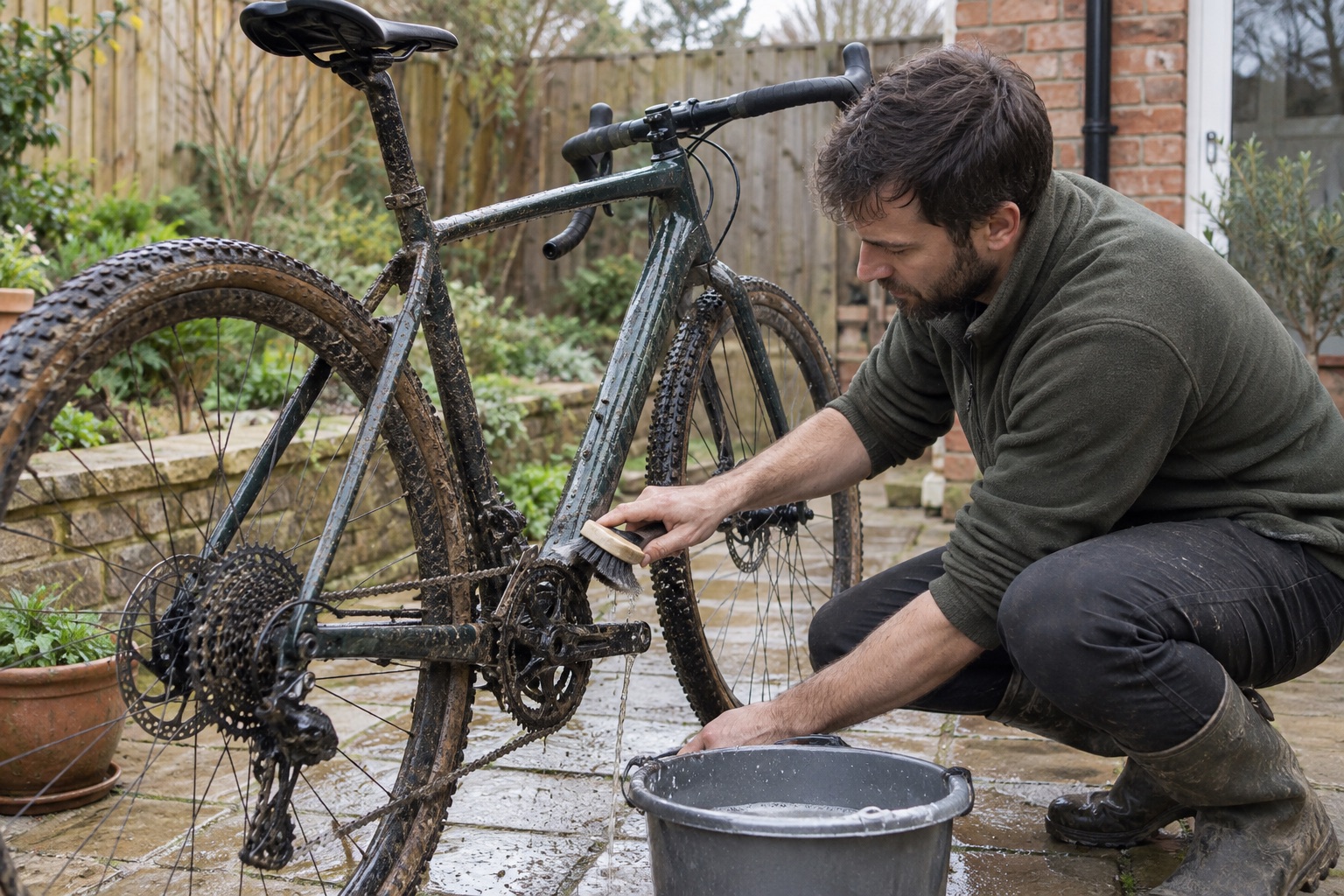
Pressure can move water into places a bike cannot drain
Hubs, headsets, bottom brackets and suspension pivots depend on seals and lubricated bearings. A narrow jet can push water and grit past them, while spraying brake pads or rotors with degreaser can compromise braking. Trek’s bicycle-care guidance says not to use a high-pressure washer and recommends hose, bucket, mild soap, soft brush and towel instead. Other makers and components may have different requirements: follow the strictest relevant manual.
If the bike has a motor and battery, stop here and use the separate e-bike cleaning guide.
Clean mud without blasting components
- Let heavy mud soften rather than scraping grit across the frame.
- Use a gentle hose or bucket rinse directed at frame tubes and tyres, away from bearing and brake openings.
- Apply a bike-approved cleaner to the permitted parts and follow its dwell instructions without letting it dry.
- Use a clean soft brush or sponge for paint and a separate brush for the dirty drivetrain.
- Rinse with low flow, then dry the frame and check brakes, tyres and bolts before riding.
Clean and lubricate the chain according to the drivetrain maker, wiping away excess and keeping lubricant off braking surfaces. Do not use a wall cleaner, car shampoo or household degreaser without bike-component approval.
If the bike maker permits a powered rinse
A portable power cleaner may offer controlled water away from a tap, but it is still a jet. Use its lowest suitable mode, broadest fan and generous distance. Keep the stream moving over the frame and tyres only; avoid hubs, bottom bracket, headset, suspension seals, bearings, electronic shifting and disc brakes. If the bike or component maker prohibits any powered jet, use the manual method instead.
The power-cleaner comparison explains why a handheld unit is not a full mains washer, but lower headline pressure is not a warranty of bicycle safety.
Bike cleaner first, powered rinse only if permitted
Muc-Off Nano Tech Bike Cleaner is a bike-specific product for appropriate frames and parts; follow its pre-rinse, dwell and rinse directions. The Worx Nitro HydroShot is a portable rinse option only for bikes whose maker allows it. The cleaner does not make a strong or close jet safe.
 View product on Amazon
Muc-Off Nano Tech Bike Cleaner 1L
Best for: Washing muddy bicycle frames with a gentle brush and controlled rinse
A bicycle-specific cleaner for frame and component grime. Follow the label's dwell and rinse instructions without letting it dry; keep spray and rinse away from e-bike electrical openings.
Use only where the bicycle and component makers permit the cleaner; it does not make a high-pressure rinse safe.
- 1 l bottle
- Bike cleaner
- Carbon-compatible claim
- Rinse as labelled
 View product on Amazon
Worx Nitro HydroShot WG633E
Best for: Bikes, garden furniture and quick rinses where portability matters most
A lightweight handheld cleaner rather than a substitute for a mains patio machine. It draws from a bucket or other fresh-water source and delivers 38-bar rated pressure with up to 220 l/h flow.
What stands out
- 2.2 kg with battery
- Draws from a separate water source
- Five spray patterns and 6 m suction hose
Keep in mind
- Far lower pressure and flow than a mains washer
- A poor fit for large or heavily soiled paving
- 38 bar rated
- 56 bar max
- 220 l/h max
- 20 V battery
Finish with function, not just appearance
Spin the wheels and check for rubbing, inspect tyres and confirm that the brakes work before riding. Dry and lubricate the chain as specified. If water seems to have entered a bearing or electronic component, seek service rather than riding through it. Use our vehicle hub for other car and bike cleaning topics.
Frequently asked questions
Can I pressure wash bicycle tyres?
A gentle rinse is usually enough. Keep any powered fan back and away from hubs, valves and brake components.
Is a cordless power cleaner safe for bikes?
Only where the bike maker permits it, and only with a broad low-force rinse away from sensitive parts. Some manuals prohibit high-pressure washing entirely.
Where should I avoid spraying?
Hubs, bottom bracket, headset, suspension seals, brake assemblies, electronic controls and any open connector.
Can I use car shampoo on a bicycle?
Use a bike- and component-approved product. Car formulations may not suit every frame finish, brake or drivetrain component.
Do I need to lubricate the chain after washing?
Dry and lubricate it as the drivetrain maker recommends, then wipe off excess and keep lubricant away from brakes.