
Topic guide
Pressure-washer help and troubleshooting
Follow guided external checks for low pressure, pulsing, leaks and starting problems, with clear stop points and model-specific maintenance guidance.
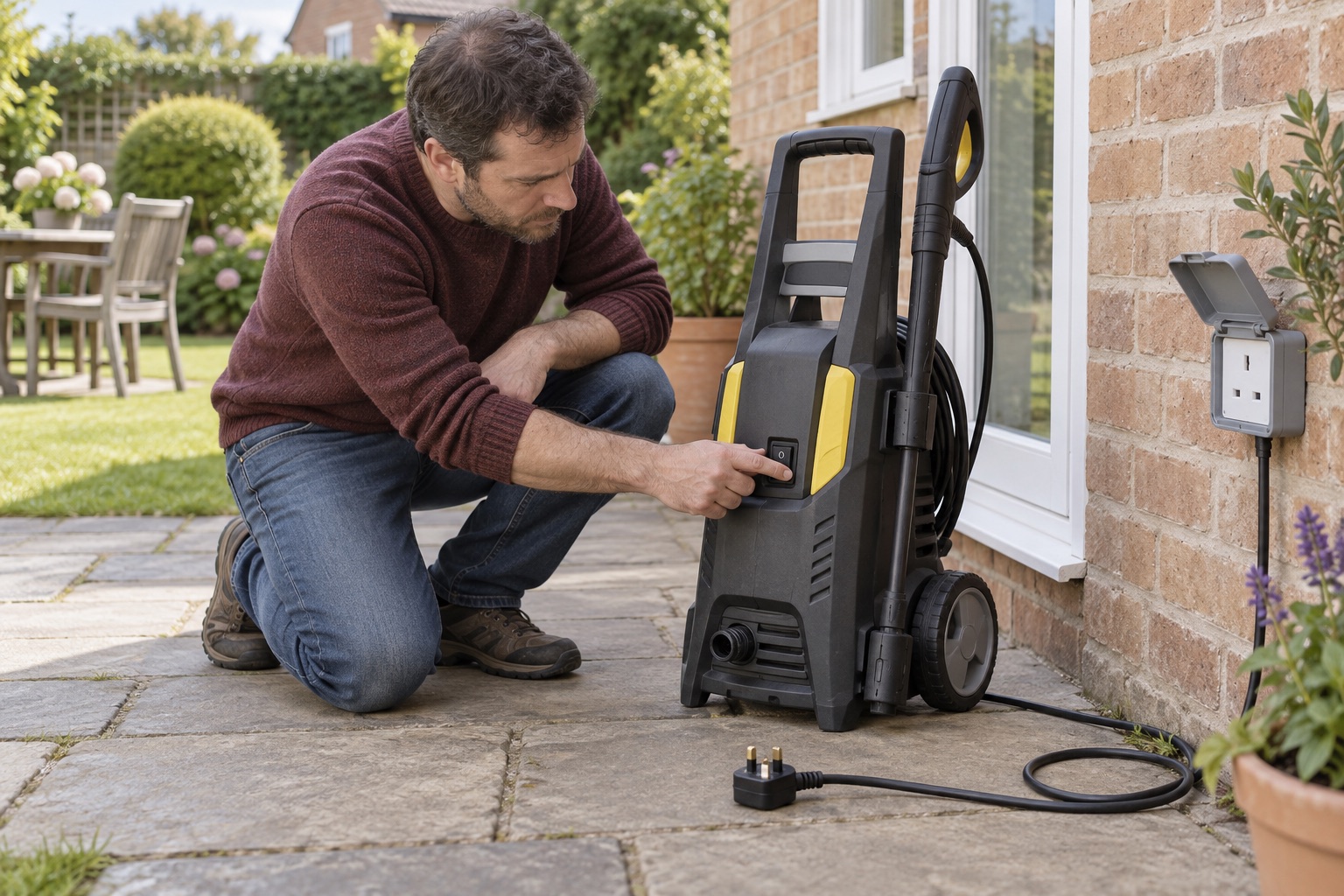
Begin with a safe shutdown
If the machine behaves unexpectedly, release the trigger, switch it off and disconnect it as the manual directs before touching a nozzle, filter, hose or fitting. Never put a hand near a suspected high-pressure leak. HSE's warning on hydraulic injection injury explains why even a small-looking wound needs urgent medical assessment. Damaged electrical parts, smoke, burning smells and leaks from the pump housing are reasons to stop and arrange qualified service, not to keep testing.
Choose guided checks for the symptom
If the motor runs but the jet is weak, start with the guided low-pressure checks. Check that the tap and inlet can supply the required flow, that the hose is not kinked and that air has been purged using the maker's procedure. The guided pulsing checks distinguish a surging jet from repeated cycling with the trigger released, which is a stop-and-service boundary. Do not compensate by opening the machine or forcing a blocked nozzle.
For visible water, locate whether it is at a garden-hose connection, quick coupling, gun or machine body. The guided inlet-leak checks cover only a clearly identified removable low-pressure inlet connection, not a running pressure-hose or pump leak. If the washer is silent or stops during work, use the guided won't-start checks or guided cutting-out checks. Tripped protection means stop and seek qualified help, not another reset or powered attempt.
Prevent avoidable faults
The inlet filter and removable nozzle are worth checking after dirty-water or low-flow symptoms, but follow the exact machine manual before removing parts. Our cleaning guide starts with shutdown and pressure release. A water butt or container is suitable only for machines that support the appropriate self-priming setup; read the water-butt guide before buying a suction kit.
Frost can damage water left inside a pump, while a coiled hose can hide a kink or split until spring. Use the printable winter storage checklist when finishing the season. Before the next job, read care and safety for electrical protection, stable footing and runoff. Electrical Safety First's pressure-washer advice is an independent starting point for the electrical side.
These checks are deliberately limited to user-serviceable parts. When the symptom persists after safe external checks, use manufacturer support for the exact model rather than treating a pressure washer as a DIY pump repair.