
Fault-finding guide
Pressure washer not building pressure
Diagnose low or no pressure with safe external checks for tap flow, inlet filters, air, nozzle setting and leaks; know when pump repair needs service.
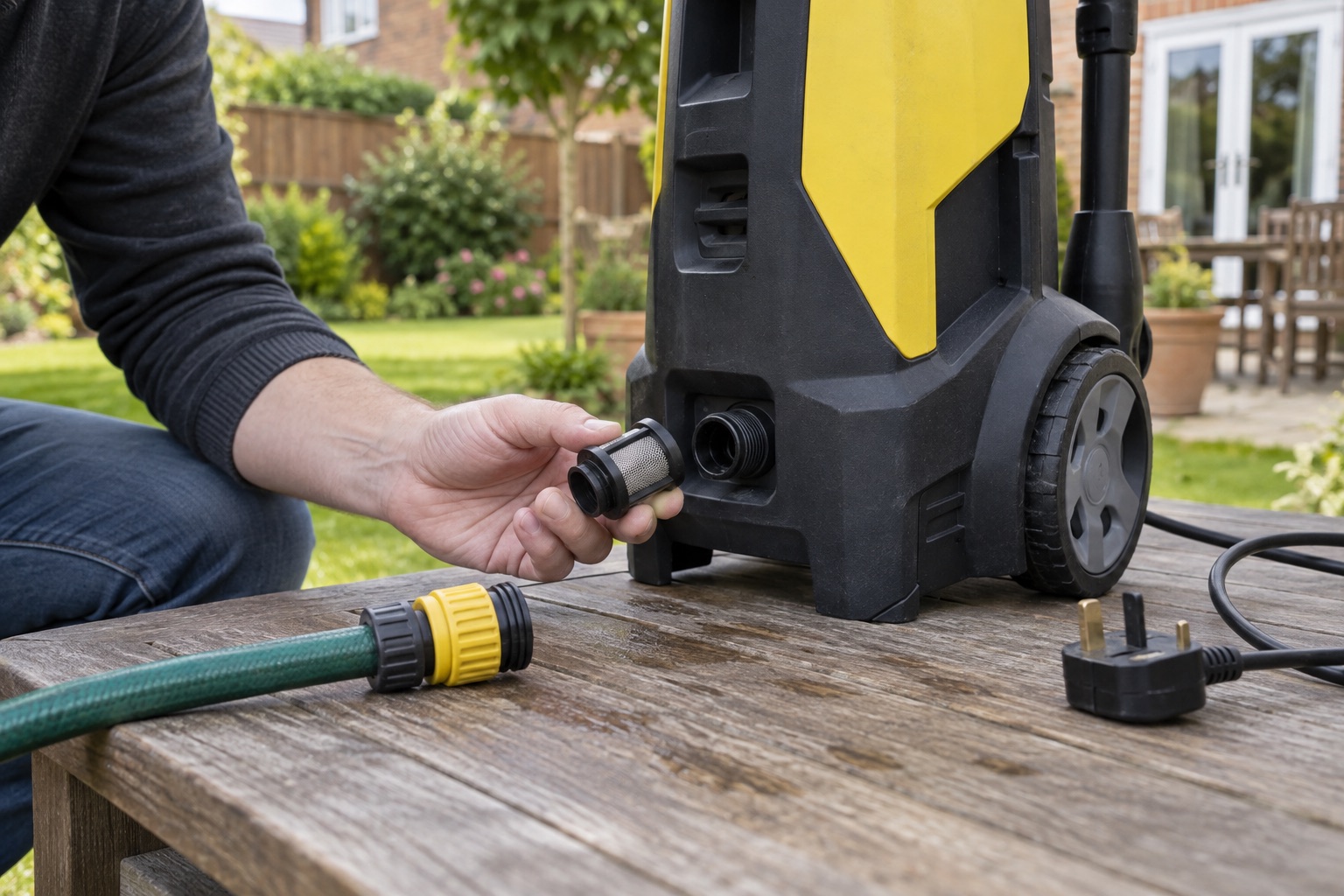
Work through the safe external checks
One external check at a time
Guided low-pressure checks
Start with warning signs, then follow the external checks for this symptom. Your answers stay in this browser; this tool cannot diagnose an internal fault or approve a restart.
Your next step
Your answer will determine whether to pause, continue external checks or seek service.
Read the symptom guides →The Kärcher UK-linked Flex manual separates supply, inlet-screen, setting and air checks from service work. Its procedures and timings are model-specific. Electrical Safety First covers damaged electrics and tripped protection; HSE's injection-injury warning explains why a small-looking wound can still be urgent.
Start with a safe shutdown and the supply
Never detach a high-pressure hose while it is pressurised. Complete your exact model's shutdown, safe power-isolation and trapped-pressure release sequence, then inspect only external, user-removable parts. If a plug or socket is wet, do not touch it; isolate the supply safely and seek help.
- Open the tap fully and confirm a steady flow from the garden hose into a suitable container before reconnecting.
- Uncoil the supply hose; check for a kink, flattened section, restrictive connector or closed valve.
- Inspect the washer's removable inlet sieve or water filter according to the manual. Rinse it gently and reinstall it correctly.
- Inspect external couplings for a poor seal and reseat them only after depressurising.
A water butt adds a separate question: does the exact model support self-priming, and is the strainer submerged in clean water? See our water-butt setup guide. Do not run the pump dry while testing.
Clear trapped air and check the nozzle setting
Air left in the supply can make a newly connected washer splutter or fail to reach pressure. Kärcher and Bosch describe model-specific venting procedures; follow yours exactly. A blocked or worn nozzle can also change the spray. After switching off and relieving pressure, inspect a removable nozzle for debris and clean it only by its manual. If the lance has adjustable patterns, confirm it is not simply set to a low-pressure detergent mode.
Our nozzle and filter cleaning guide covers the removable parts. Do not use a needle in a tiny aperture unless your manufacturer supplies or explicitly permits that tool; enlarging the opening can make the nozzle unusable.
What the symptom suggests
Weak but steady spray: check the setting, inlet flow and nozzle pattern. Sputtering spray: suspect air, intermittent supply or a partly blocked filter. Pressure drops after several seconds: the incoming flow may not keep up or a supply hose may be collapsing. Motor runs but no useful output: stop promptly rather than letting an unprimed pump continue. A damaged high-pressure hose or significant leak changes the diagnosis and needs immediate shutdown.
An optional external filter is relevant only if the manufacturer lists it for your machine and the source warrants it. The Kärcher K-series part shown below does not replace a blocked built-in screen or repair a faulty pump. It can itself become clogged if left unmaintained.
 View product on Amazon
Kärcher K-Series Water Filter
Best for: Filtering small particles from an approved water supply before a Kärcher K-series pump
A transparent inlet-side filter for the K 2–K 7 domestic range. It catches particles, but does not make dirty, chemically contaminated or unsuitable water safe for the washer.
An optional extra where the machine instructions and water source justify it; first inspect and clean any filter already built into the washer.
- Inlet side
- Part 4.730-059.0
- K 2–K 7
- Check existing filter
When to stop and arrange service
Stop if pressure remains low after a sound supply, correct setting and clean external parts are confirmed; if water or oil comes from the machine housing; if a hose bulges; or if the motor smells hot or trips protection. Pump valves, seals and electrical components are not routine user checks. Use the maker's service route and quote the exact model and symptoms. Never put a hand in front of a jet or search for a leak by touch: high-pressure injection injuries need urgent medical attention.
Frequently asked questions
Why does my pressure washer have water flow but no pressure?
The nozzle may be in low-pressure mode, air may still be trapped, or supply flow may be inadequate. If those external checks pass, seek service.
Can a blocked inlet filter reduce pressure?
Yes. Clean the removable screen as your manual directs and never operate without a required filter.
Should I run the washer without water to test it?
No. Dry running can damage the pump. Verify water supply before starting.
Can a long garden hose cause low pressure?
It can if its bore, kinks or connectors restrict delivery. Check the flow at the washer end against the model's requirement.
When is a pump repair necessary?
When the fault persists after safe external checks or there is significant internal leakage, oil or abnormal motor behaviour, contact authorised service.