
Artificial-turf care
How to clean artificial grass
Brush leaves, handle spills and pet waste, rinse gently and protect the seams, infill and drainage of an artificial lawn.
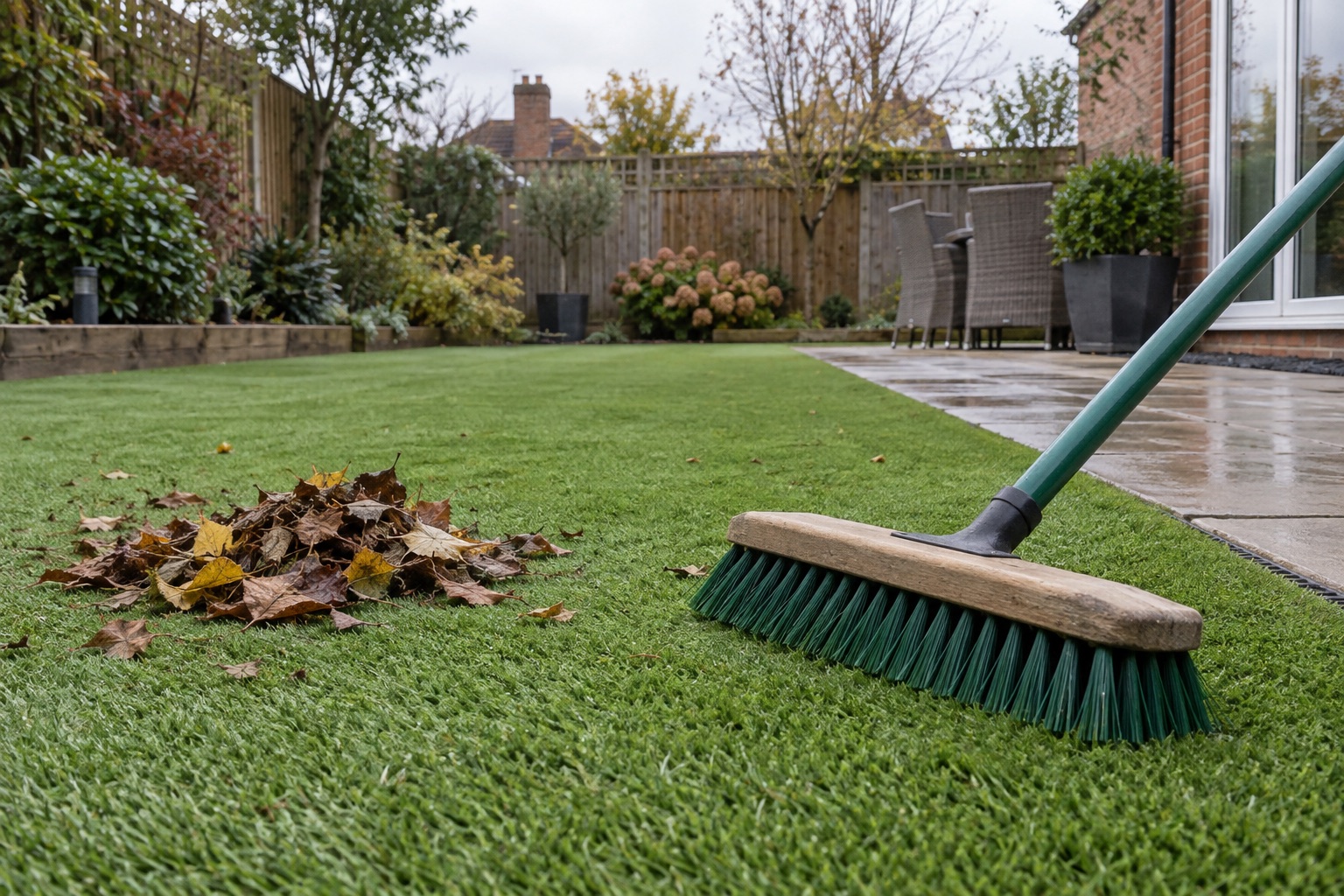
Namgrass's own care leaflet recommends removing debris with a broom, plastic rake, blower or vacuum and periodically brushing the pile. Other turf systems may specify different tools. Read the Namgrass care leaflet.
Check the grass specification before deep cleaning
Artificial lawns differ in pile length, infill, backing and drainage base. Ask the installer or manufacturer which direction to brush and whether any detergent is allowed. Inspect lifted seams, loose edges, weed growth and standing water. Cleaning will not fix a failed sub-base or drainage channel; excessive water can make that problem worse.
Do not assume a pressure washer is harmless because the blades are plastic. Easigrass advises against power washers or power hoses except by professionals. A hard jet may remove infill, loosen joins and push dirt deeper into the pile. Petrol and solvent spills need the turf maker's advice before you apply anything.
A gentle routine for a cleaner lawn
- Collect large leaves, twigs and litter by hand. Check for glass or pet waste before brushing.
- Brush lightly against the pile only if the turf maker recommends it, lifting flattened fibres without dragging at seams. Use a plastic-tine or artificial-turf brush, not a wire brush.
- Rinse occasional dust with a gentle hose flow, keeping the water moving towards the intended drainage. If water puddles, stop and diagnose the base.
- Allow the lawn to drain and dry before heavy use. Remove nearby leaf sources and keep edges clear to reduce repeated debris.
A leaf blower on an appropriate low setting may move dry leaves on some installations, but keep it from lifting loose infill. Winter frost should be allowed to thaw naturally; scraping ice can damage the pile.
Choose a brush that fits the lawn
The Spear & Jackson rake brush below has curved bristles and an adjustable handle; the listing identifies astro turf as a use. Work lightly on a test patch and check the installer allows that bristle type. It is most useful for routine leaves and edge debris, not for grinding out stains or rebuilding flattened areas.
 View product on Amazon
Spear & Jackson 4865RB Rake Brush
Best for: Lifting loose leaves and light debris from compatible artificial turf
A curved-bristle manual rake brush with a telescopic handle, especially useful for smaller artificial-grass areas and edges. It will not repair a failing backing or drainage layer.
Check the turf installer's brushing direction and infill instructions; test gently where seams or fibres are loose.
- Curved bristles
- Telescopic handle
- 770–1400 mm
- Manual tool
Pet waste, food stains and stubborn odour
Remove solids promptly, bag them and rinse the affected area with gentle water once the turf maker permits it. Blot fresh food or drink spills rather than rubbing them through the pile. For odour, use only a cleaner specifically approved for the installed turf and check its pet, plant and drainage instructions; avoid bleach or general patio acid. Persistent smell may come from trapped organic matter beneath the surface, where extra fragrance will not solve the cause.
If the surface has become unsafe or water remains on top after ordinary rain, contact the installer. Nearby hard surfaces should be handled separately: our gravel-path guide protects loose aggregate, while step cleaning is about maintaining grip.
Frequently asked questions
Can I pressure wash artificial grass?
Avoid it unless your turf maker and a competent professional specify a controlled method. A hard jet can disturb infill, seams and backing.
What brush should I use?
Use a turf-approved soft or plastic-bristle tool and follow the maker's brushing direction. Never use a wire brush.
How do I remove dog waste?
Lift solids promptly, dispose of them hygienically and rinse gently if the installation permits it.
Can I use bleach on artificial turf?
Do not assume so. Bleach may affect colour, backing and surrounding plants; use only a treatment the turf maker approves.
Why is water pooling on the lawn?
Check for blocked drainage or a failing sub-base. More rinsing is unlikely to solve a persistent puddle.