
Window damage-prevention guide
Can you pressure wash exterior windows?
Why high-pressure jets risk glazing seals and frames, and how to clean reachable exterior windows with soft tools and controlled water.
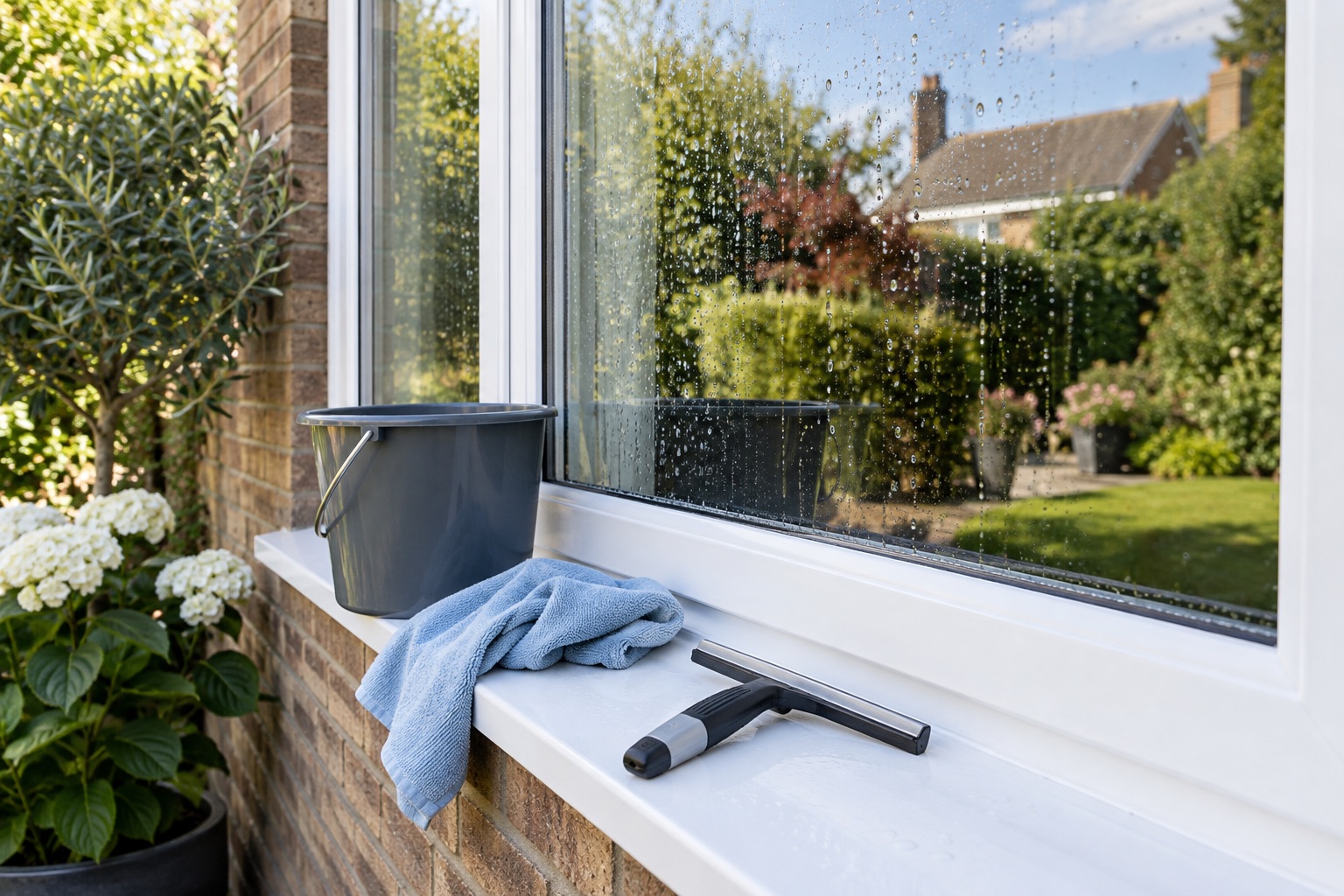
Why windows dislike a concentrated jet
A sealed unit relies on intact seals, glazing beads, drainage paths and surrounding frame joints. A high-pressure jet aimed at the glass edge, an opening sash or an air vent can push water where rain would not normally go. It may also lift weak paint or reveal a pre-existing crack the hard way. Frames have different care rules: uPVC, painted timber and aluminium should not be treated as one surface.
A broad garden-hose rinse with modest flow is different from pressure washing, but even that should not be directed upward into vents or beneath sills. Check the glazing maker's care instructions, especially for self-cleaning glass, applied films or special coatings. If a pane is cracked or a seal has failed, arrange repair before washing.
Clean reachable glazing without dragging grit
- Move items below the window and keep electrical fittings and open vents dry. Work from stable level ground, not an improvised step.
- Rinse or lift loose dust and grit first, using low water flow and a clean cloth. Never scrub dry sand across glass.
- Wash the glass with water and a small amount of cleaner the glazing maker permits, using a clean soft cloth or dedicated window applicator.
- Squeegee accessible glass in overlapping passes, wiping the blade between passes. Wipe frames and sill with a different cloth.
- Check that drainage slots remain clear and weather seals stay seated. Dry any indoor water promptly and investigate its source.
Eurocell recommends soap and water for glass and a soft cloth for uPVC frames, while warning against excessive pressure on uPVC. On painted timber, keep water exposure brief and inspect for peeling paint before cleaning.
Keep soft cloths clean and separate
Microfibre cloths help with frames, corners and final drying on reachable panes. Use a fresh one for the glass rather than a cloth that collected grit from the sill. The pack below is a general cleaning aid, not a substitute for safe access or a special-coating care guide.
 View product on Amazon
Amazon Basics Microfibre Cleaning Cloths, 24-pack
Best for: Separate soft cloths for low-water cleaning and drying of accessible surfaces
A multipack of reusable microfibre cloths for controlled hand cleaning. Keep clean cloths separate by task, and never drag grit across paint or electrical contacts.
Useful for careful wiping, not a substitute for a paint-safe wash mitt on gritty car bodywork.
- 24 cloths
- 40.5 × 30.5 cm
- Reusable
- Keep grit separate
For upstairs or awkward windows
HSE's guidance for window-cleaning work prioritises avoiding work at height where practicable, including by using suitable water-fed poles. Such a pole still needs a clear operating area and distance from overhead cables, and the operator must be able to control it. If you cannot see the head or manage the reach, hire a competent window cleaner. Do not lean on a conservatory roof to reach a higher pane. Our uPVC roofline guide covers adjacent frames and trim.
Take the plan outside
Delicate outdoor-surface cleaning checklist
For reachable glass, coatings, render, composite and vulnerable stone. This is a readiness check, not blanket approval for pressure washing or a chemical.
For this job: Keep pressure jets away from glazing, seals and vents. Use glass-safe tools on reachable sound panes; arrange safe access for higher windows.
Tick on screen or leave blank to tick on paper. Nothing is saved or submitted. Printing includes this checklist only.
Exact model / material / product:
Notes / conditions:
Care references: K Rend: system-specific maintenance, not universal render approval; HSE: ground-level window-cleaning access; Historic England: hazards in older homes. Checked September 2026. Your exact manual, material guidance and current label take priority.
Frequently asked questions
Will pressure washing break a window?
It can damage weak glazing or its seals, and can force water into frame joints. Avoid treating windows with a pressure jet.
Can I use a garden hose on windows?
Gentle flow can lift loose dirt on a sound window if the maker allows it; do not direct water into vents, seals or opening joints.
What causes streaks after washing?
Dirty cloths, residue, mineral-rich water and a soiled squeegee blade are common causes. Work in small sections and use clean tools.
Should I clean a cracked pane?
Do not press or spray it. Arrange glazing repair and avoid putting anyone underneath a potentially loose pane.
How should I reach an upstairs window?
Use a competent cleaner or appropriate ground-operated equipment where the site allows; do not improvise a ladder position.