
Natural-stone material guide
How to clean a natural-stone garden wall
Identify limestone, sandstone and other stone, protect old mortar and use gentle cleaning before considering any treatment.
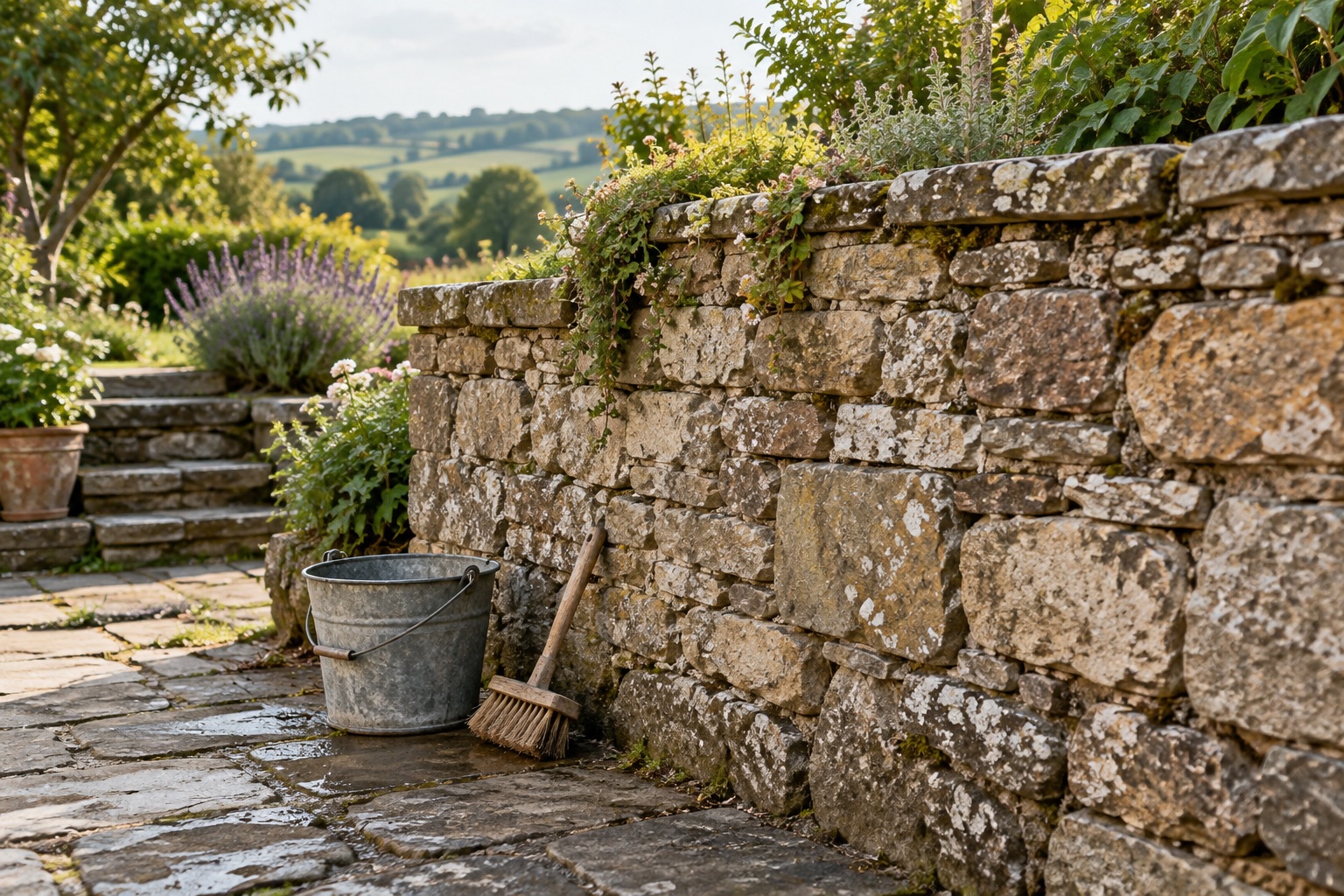
Know the stone, mortar and wall condition
A garden wall may mix sandstone, limestone, granite, slate or reclaimed pieces. Its joints may be modern cement or softer lime mortar. The wrong cleaner can etch carbonate stone or trap moisture in an older wall. Look for flaking faces, open joints, bulges, salts or vegetation rooted in the masonry. Cleaning should never be used to hide structural movement.
Do not identify a stone only by colour. If you cannot tell whether a pale block is limestone, assume acid-sensitive until a knowledgeable supplier or mason confirms it. Historic or listed fabric needs conservation-led advice. Stone Federation guidance for Irish Blue Limestone warns that acid-based cleaners can irreversibly damage that stone and routine pressure washing can degrade its surface. Follow the guidance for your actual material rather than applying one stone's care rules to every wall.
Begin with the least forceful useful method
- Remove loose leaves and surface dirt with a soft dry brush, working without scraping the stone or mortar.
- On a small hidden area, test clean water and a soft brush or sponge. Avoid saturating the wall, especially before frost or where damp is already present.
- Work in short sections, rinse gently if the material tolerates it, and let the wall dry completely before judging the colour.
- Keep washwater away from planting beds and drains. Do not use a rotary nozzle, wire brush or metal scraper on weathered faces.
Dark biological growth may need a surface-specific labelled treatment, but only after confirming stone type, nearby planting, application access and runoff. Do not borrow a patio product merely because it says “stone”. Our limestone paving guide explains acid sensitivity in more detail; white salts on masonry may signal a water-source problem.
A soft brush for loose deposits
The Faithfull coco hand brush below is useful for dry, light surface dirt on sound stone and mortar. Test the wall first and stop if sand grains or mortar come away. It is a small-area tool, not a way to scrub a fragile wall back to a new-looking surface.
 View product on Amazon
Faithfull Soft Coco Hand Brush
Best for: Dry removal of loose deposits from sound masonry
A soft hand brush for lifting loose deposits without the abrasion of a wire brush. It will not fix ongoing water entry or a failing mortar joint.
Try a small dry area first and stop if the stone, brick face or mortar begins to shed.
- 275 mm
- Soft coco bristles
- Dry brushing
- No wire bristles
When cleaning is the wrong next step
Recurring algae beneath a leaking coping, salts after rain, cracking mortar or a leaning retaining wall all call for diagnosis. A mason can identify the stone, check drainage behind a retaining wall and specify compatible pointing. Avoid sealing damp stone to make it look cleaner; trapping moisture can accelerate decay. If the wall is high, do not stretch from a ladder with a wet brush or pole—plan professional access.
Take the plan outside
Delicate outdoor-surface cleaning checklist
For reachable glass, coatings, render, composite and vulnerable stone. This is a readiness check, not blanket approval for pressure washing or a chemical.
For this job: Identify stone and mortar. Do not use acid on limestone; crumbling joints, flaking faces or a leaning wall need a conservation-aware mason.
Tick on screen or leave blank to tick on paper. Nothing is saved or submitted. Printing includes this checklist only.
Exact model / material / product:
Notes / conditions:
Care references: K Rend: system-specific maintenance, not universal render approval; HSE: ground-level window-cleaning access; Historic England: hazards in older homes. Checked September 2026. Your exact manual, material guidance and current label take priority.
Frequently asked questions
Can you pressure wash a natural-stone wall?
It is risky for soft stone and weathered joints. Begin with gentle hand cleaning and seek material-specific advice before considering any powered method.
Can I use vinegar on limestone?
No. Acid can etch carbonate stone, including limestone and marble.
How do I remove moss from old mortar?
Do not rake it out with force. A conservation-aware mason should assess failing mortar and the moisture conditions that support growth.
Should a wall look completely uniform after cleaning?
No. Natural patina and colour variation are normal; aggressive cleaning for uniformity can remove historic material.
When should I call a mason?
Call when the wall leans, stone flakes, joints crumble or moisture and staining repeatedly return.