
Brickwork diagnosis and care
How to deal with efflorescence on brickwork
Recognise powdery white salts on exterior brick, brush them off dry and investigate recurring moisture before using any cleaner.
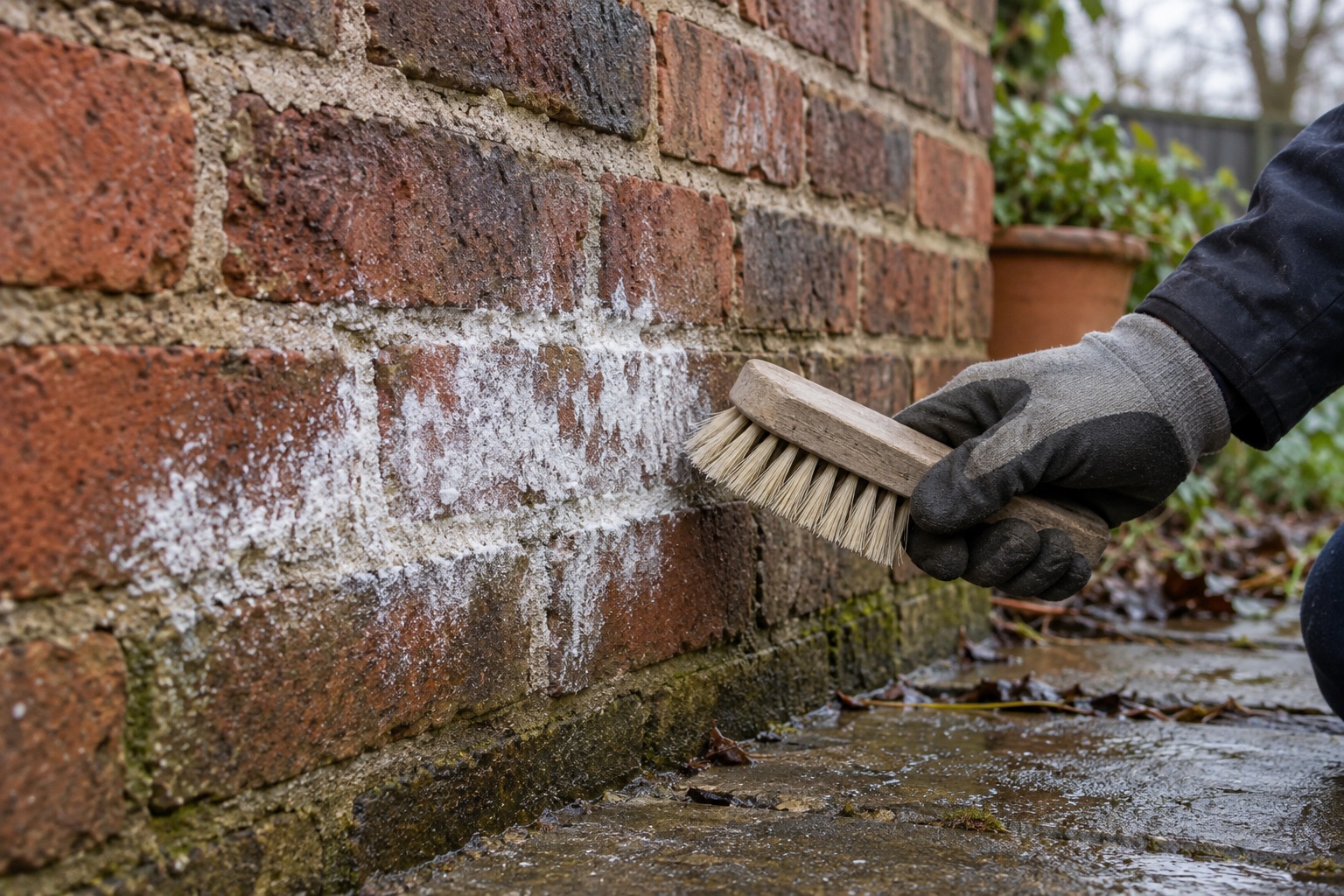
The Brick Development Association advises dry brushing light efflorescence and investigating moisture where deposits recur; a wire brush and excessive wetting can make matters worse. Read the BDA brick-cleaning guide.
Is the white material really efflorescence?
Efflorescence commonly looks like a powdery white bloom on the face or joints of brick. Moisture dissolves salts in masonry and carries them to the surface; as the water evaporates, the salts remain. It is different from a hard limescale-like crust, paint failure, mould or a pale patch in the brick itself. Note whether it appeared after construction, prolonged rain or a leak, and whether it is spreading. Photograph the wall dry before cleaning so you can compare later.
Check the brick face and mortar. If bricks are spalling, joints are crumbling, the wall is persistently wet or salts are inside the home, cleaning is not the main task. Consider an experienced brickwork or damp specialist to identify the moisture source. The Brick Development Association cautions against aggressive cleaning methods that damage the brick face.
Start with a gentle dry brush
Wait until the wall and deposit are dry. On a small sound patch, brush lightly with a soft non-metal hand brush and collect the loose powder rather than washing it down the wall. Work from the top of the patch down, watching for face dust or mortar grains. Stop if the surface starts to shed. A wire brush can permanently mark brick; a pressure washer can drive more water into masonry and worsen the cycle. Avoid default use of acids or proprietary “efflorescence remover” unless the brick manufacturer or a specialist recommends that exact product.
A soft coco brush is an inexpensive aid for this dry first pass; it is not a cure for moisture ingress. If residue is stubborn, do not keep scrubbing harder. Check the brick and mortar specifications and seek advice on a material-approved next step.
 View product on Amazon
Faithfull Soft Coco Hand Brush
Best for: Dry removal of loose deposits from sound masonry
A soft hand brush for lifting loose deposits without the abrasion of a wire brush. It will not fix ongoing water entry or a failing mortar joint.
Try a small dry area first and stop if the stone, brick face or mortar begins to shed.
- 275 mm
- Soft coco bristles
- Dry brushing
- No wire bristles
Find the water that brings salts back
Look for leaking gutters or downpipes, overflow, poorly directed splashback, open joints, failed copings, raised ground or planters against the wall. Resolve a clear defect before repeating cosmetic cleaning. New brickwork can also release temporary salts as it dries, so monitor whether a light bloom diminishes once the wall stays dry. Persistent localised staining needs a closer inspection, particularly where water is reaching a cavity or internal finish.
For ordinary soil on sound brick, see how to clean brick walls safely. Do not apply the pressure-washing advice for patios to a vulnerable wall. Our soft versus pressure washing comparison explains the different risks.
Frequently asked questions
Is efflorescence harmful to brick?
The powder itself is usually a symptom, but recurring moisture can damage brick or mortar. Investigate repeated or heavy deposits.
Can I pressure wash white salts off?
That may drive water into the wall and damage the face or joints. Start with gentle dry brushing on sound brick.
Should I use vinegar or brick acid?
Not as a default. Acids can alter or damage brick and mortar and may not address the moisture source.
Will efflorescence disappear by itself?
A light bloom on drying masonry can lessen, but recurring deposits suggest continuing water movement.
When should I call a specialist?
Seek help for spalling brick, crumbling mortar, indoor damp, heavy crusting or a recurring localised wet area.