
Plastic furniture guide
How to clean plastic garden furniture
Remove grime and green film from plastic garden chairs and tables without scratching the surface or using harsh bleach and abrasive pads.
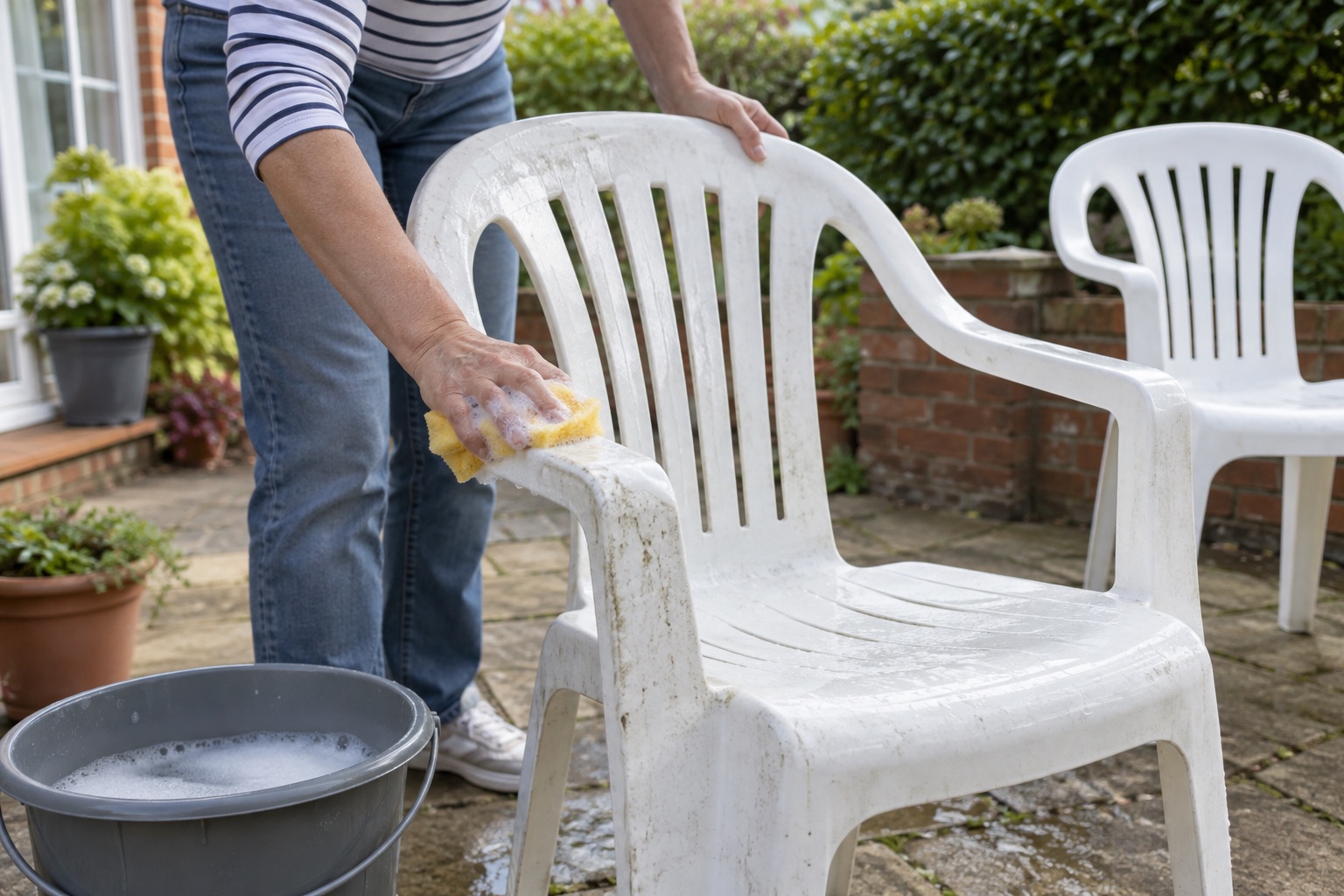
Check whether it is moulded plastic, resin or a coated composite
A one-piece polypropylene chair, a resin table and a wood-look polywood bench may have different care directions. Find the product label if you can, especially before using a concentrated cleaner. Examine cracks, chalky surfaces and brittle legs; cleaning will not restore lost strength. Move an unsafe chair out of use.
Green specks commonly grow in shaded, damp recesses. Black marks may be rubber transfer, ingrained grime or material ageing. White plastic can yellow under UV exposure; no ordinary wash reliably reverses a change inside the polymer. Our general furniture guide covers mixed-material sets.
How to clean plastic chairs and tables
- Remove cushions and dry-brush leaves from drainage holes and undersides.
- Rinse loose grit gently or lift it with a damp cloth before rubbing the main surface.
- Apply a plastic-approved cleaner to a hidden area. Follow label dilution and dwell time.
- Use a soft cloth or brush on arms, seat texture and table edges; avoid abrasive pads.
- Rinse completely if required, without directing water into hollow sections or nearby electrics.
- Dry the seat and feet before stacking, so trapped water does not leave marks.
HG's furniture cleaner guidance lists plastic among the intended materials, but always check the particular chair's finish and the current bottle instructions. Ordinary mild soapy water may be enough for routine dust; a specialist cleaner is most useful for persistent outdoor film.
Handle stubborn marks without making the finish rougher
Do not scrub harder at a coloured mark until you know what it is. Try a second gentle clean after the first has dried. Abrasive paste can make a shiny chair permanently dull, and strong solvents may soften or discolour it. A little surface texture makes later dirt harder to remove, so preserving the original finish matters.
Pressure washing a sound moulded chair is sometimes shown in product advertising, but it is not necessary for routine care and may drive water into joints or break a weathered fitting. Use hand cleaning as the default. Store cleaned chairs out of prolonged standing water and cover only when dry. For a metal-framed chair with plastic slats, also read the metal furniture guide.
Cleaner and soft cloths for low-abrasion work
HG's cleaner is a plastic-furniture option where the maker permits it. Keep cloths free of grit and reserve a separate colour for dirty garden jobs. Check the care label before using on resin weave or a composite finish.
 View product on Amazon
HG Garden Furniture Cleaner 500ml
Best for: Maker-approved plastic, aluminium and coated-metal garden furniture
A furniture cleaner listed for several non-wood outdoor materials. Test a hidden patch, respect the finish and follow the label's dwell and rinse directions.
Confirm the exact furniture material and coating before use, especially around damaged paint or plated hardware.
- 500 ml
- Outdoor furniture
- Plastic and coated metal
- Patch test
 View product on Amazon
Amazon Basics Microfibre Cleaning Cloths, 24-pack
Best for: Separate soft cloths for low-water cleaning and drying of accessible surfaces
A multipack of reusable microfibre cloths for controlled hand cleaning. Keep clean cloths separate by task, and never drag grit across paint or electrical contacts.
Useful for careful wiping, not a substitute for a paint-safe wash mitt on gritty car bodywork.
- 24 cloths
- 40.5 × 30.5 cm
- Reusable
- Keep grit separate
Frequently asked questions
Can I use bleach on plastic garden furniture?
Do not assume it is safe. Bleach can discolour some finishes and needs careful handling; use the furniture maker's approved cleaner instead.
How do I clean textured plastic?
Loosen grit first, then use a soft brush and compatible cleaner in the texture. Rinse fully and inspect when dry.
Will cleaning make yellow plastic white again?
It can remove surface grime, but UV ageing within the plastic may remain.
Can plastic furniture be pressure washed?
Hand cleaning is safer, especially for older or cracked pieces. A jet can damage weak joints and force water into hollow frames.
Why do chairs look dirty again quickly?
Scratches and roughened finishes hold dirt, while shade and trapped moisture encourage growth. Clean gently and store dry.