
Concrete stain guide
How to remove oil stains from a concrete driveway
Contain a fresh oil spill, choose a concrete-safe spot treatment for older marks and keep oily wastewater out of drains.
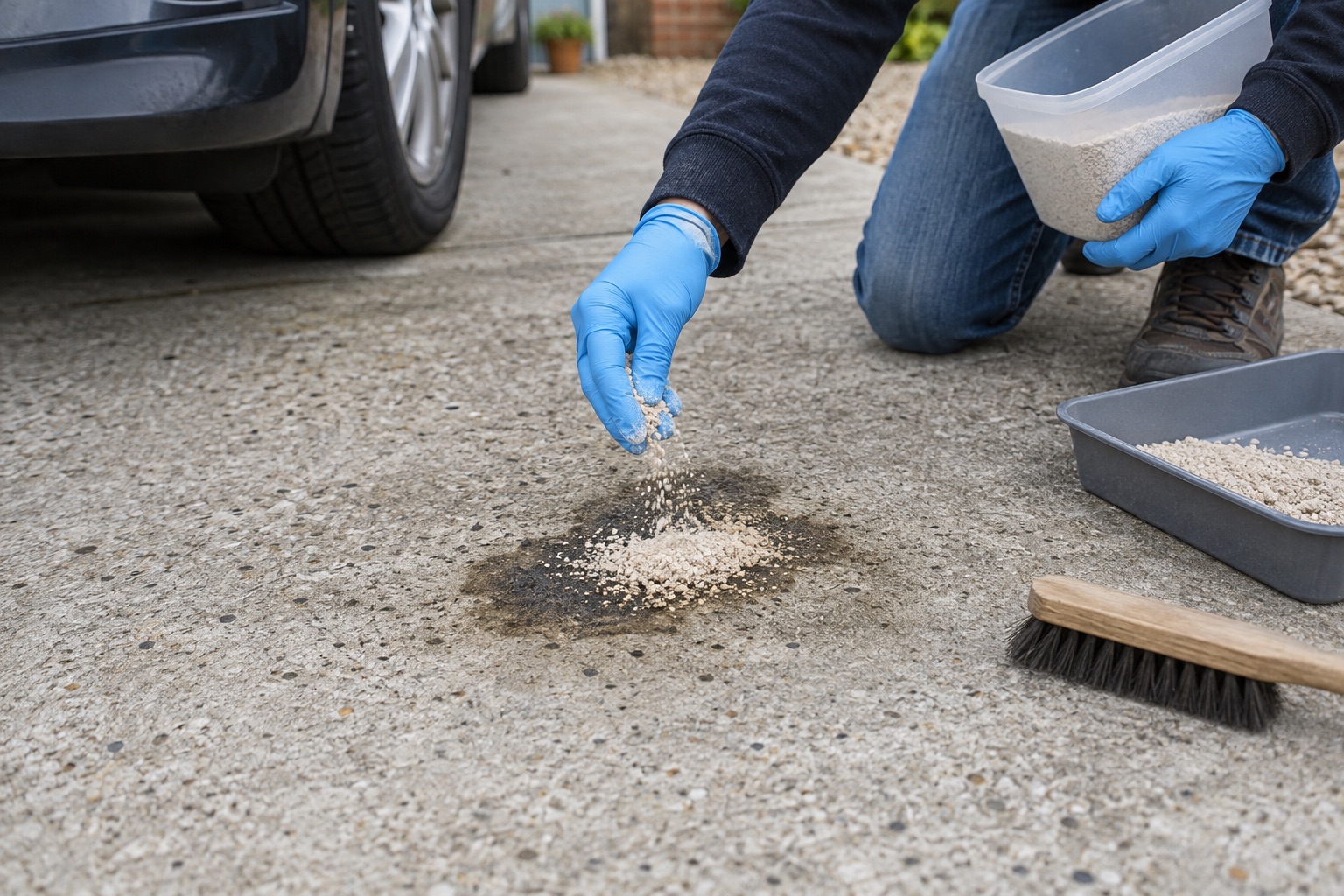
HG identifies its oil-and-grease absorber for porous stone, cement and concrete surfaces and gives a specific application method. Confirm the actual driveway material before using it. Check HG's permitted surfaces and directions.
Fresh oil: contain and lift it dry
Find and stop the leak if safe. Keep vehicles and people away from the slick surface. Place an appropriate oil-compatible absorbent around the edge so it cannot reach a surface-water drain, then cover the spill with suitable granules or pads. Sweep up the saturated material when the product instructions say it is ready. Store the waste securely and ask your council or local waste service how to dispose of oil-contaminated absorbent. Do not hose it away, mix it into garden soil or put it in an ordinary drain.
A small absorbent sock can help stop a non-aggressive spill spreading, but capacity is limited and it does not replace an absorbent for the central puddle. If a significant spill is moving towards a gully or watercourse, contact the relevant local authority or environmental incident line promptly. Our runoff guide explains why the drain type matters.
Older mark: use a concrete-approved spot treatment
After the free oil is gone, a dark shadow may remain in porous concrete. First confirm the surface is ordinary, sound concrete rather than resin, tarmac, sealed decorative concrete or block paving. On the right surface, a dedicated oil-and-grease absorber such as HG's product can draw out a localised mark as its applied layer dries. Follow the current label for surface approval, application thickness, drying time and residue removal. Try a discreet patch and allow it to dry fully before judging the colour.
One application may improve rather than erase a deeply soaked stain. Repeated aggressive scrubbing can roughen the surface and create a more visible light patch. If the mark is extensive, recurring, or linked to an ongoing vehicle leak, fix that source and consider professional cleaning or repair.
 View product on Amazon
HG Tile & Natural Stone Oil and Grease Absorber 250ml
Best for: Localised oil and grease stains on label-approved porous stone and concrete
A targeted absorber applied to a dry oil mark after loose oil has been contained. Let the layer dry, lift the crust and follow the current label for any remaining residue.
Use only where the current label permits the exact concrete or stone surface; a fresh spill still needs immediate containment first.
- 250 ml
- Spot treatment
- Porous stone or concrete
- Dry before lifting
 View product on Amazon
BearTOOLS Spill Control Absorbent Socks, 2-pack
Best for: Containing a small spill of non-aggressive water-based liquid before it spreads
Absorbent socks can form part of a small contained job, but they are not a licence to wash detergent or oily runoff towards a road gully. Check the liquid, capacity and disposal route first.
Listing limits use to non-aggressive oil and water-based fluids. Do not use with hazardous chemicals or as a substitute for collecting wastewater.
- 2 × 1.2 m
- Non-aggressive fluids
- 8 l stated maximum
- Dispose correctly
What to avoid on a driveway oil stain
A pressure washer can spread emulsified oil over a wider area and into a drain. It is not the first treatment. Do not use petrol, solvents or an unlabelled household degreaser. Avoid acid on unknown concrete and never mix cleaners. If a product requires rinsing, plan how the contaminated water will be captured and disposed of before applying it. A commercial wash bay with appropriate drainage may be the better option for a large oily job.
Once the oil issue is controlled, the rest of a concrete driveway can be cleaned using the cautious method in our concrete driveway guide. Other stains require other diagnoses: rust on paving is not an oil mark.
Frequently asked questions
Can pressure washing remove oil from concrete?
It may move surface oil but risks spreading contamination. Absorb free oil first and use a concrete-approved spot treatment for the residual mark.
Will baking soda remove a deep oil stain?
A household powder may absorb some fresh oil, but it is not a dependable remedy for an older stain embedded in porous concrete.
Can I use the same treatment on tarmac?
No assumption is safe. Tarmac and resin surfaces have different chemical tolerances; use their maker's guidance.
Where should used absorbent go?
Keep it sealed and ask your local council or waste service for the appropriate oil-contaminated waste route.
Why is the shadow still visible after cleaning?
Oil may have penetrated below the surface, or the concrete may have changed colour. Let it dry before deciding whether another labelled treatment is worthwhile.