
Patio problem-solving guide
How to remove algae from a patio
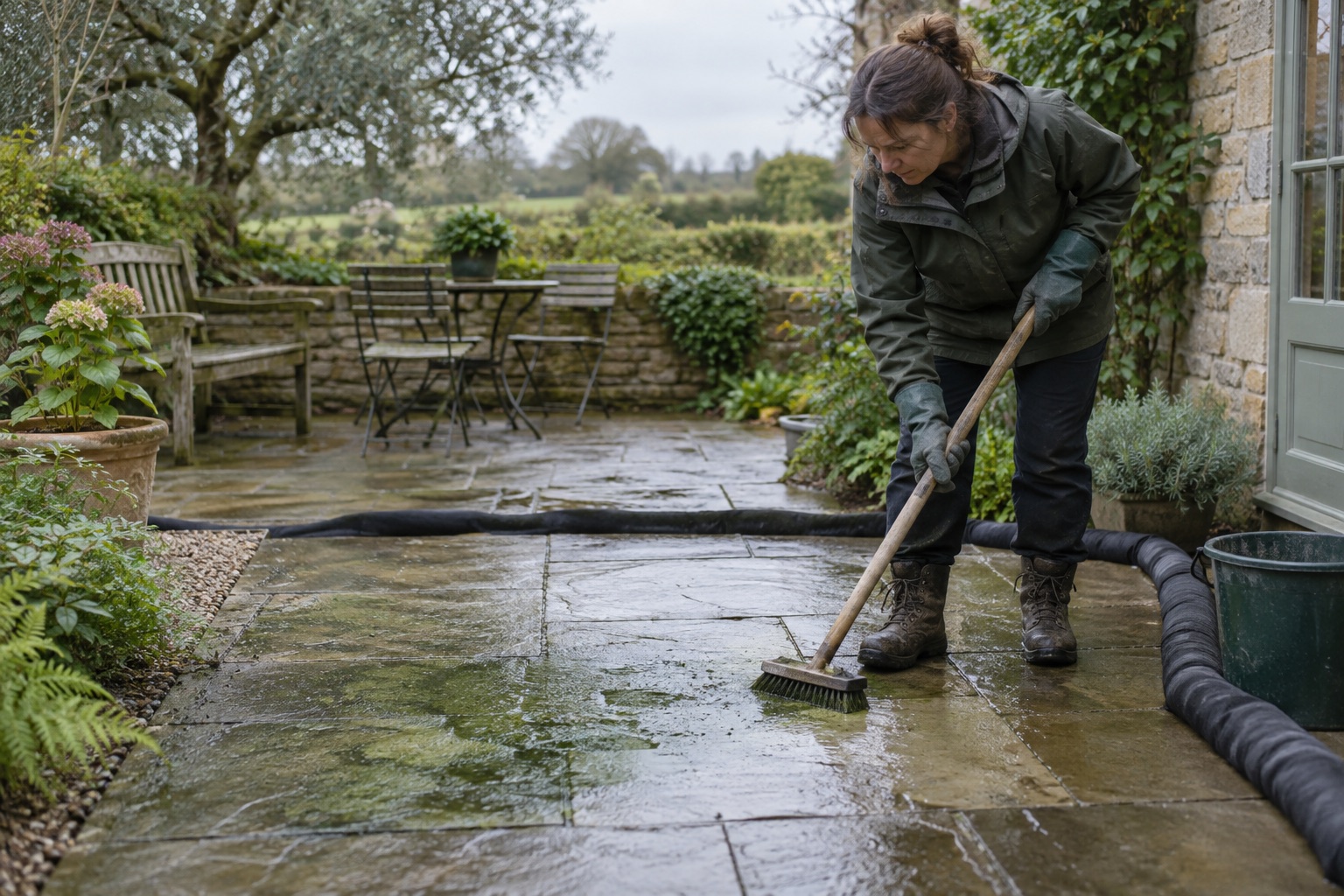
Remove slippery green algae from patio slabs with brushing, compatible treatment and controlled rinsing while protecting plants, drains and paving joints.
Useful products for the job
Address growth before reaching for pressure
A labelled outdoor algae treatment can suit some surfaces; confirm the paving, sealer, drainage and nearby planting first.
 View product on Amazon
Wet & Forget Outdoor Cleaner 5L
Best for: Label-approved outdoor surfaces with algae, mould or lichen
A concentrated outdoor treatment for organic growth on many exterior surfaces. It is a treatment, not an instant pressure-washing substitute; follow the label for dilution, weather and runoff.
Check the exact surface and any sealer with the maker before use; keep it out of ponds and follow plant and pet precautions.
- 5 l concentrate
- Outdoor surfaces
- Organic growth
- Label-led dilution
Treat it as a slip risk
Secure the area before cleaning
Wet algae can be extremely slippery. Keep children, pets and other users away, wear footwear with reliable grip and avoid carrying heavy equipment across the patch. Clear leaves and pots from dry ground first so you are not stepping repeatedly over the growth.
Identify the paving, locate drains and ponds, and inspect the joints. If the surface is cracked, loose or coated, those conditions may rule out pressure washing.
| Condition | First action | Next step | Avoid |
|---|---|---|---|
| Light green film | Sweep and brush with water | Mild compatible wash | Walking on wet growth |
| Established shaded growth | Labelled algae treatment | Repeat only as permitted | Improvised chemical mix |
| Growth in loose joints | Manual removal | Repair jointing | Direct high-pressure jet |
| Algae near a pond | Isolate and check label | Choose non-chemical alternative | Any unapproved runoff |
| Recurring puddle area | Clear and clean | Correct drainage cause | Repeated treatment alone |
Remove patio algae in controlled stages
- Sweep away loose organic matter.
- Wet and brush a small test area, working from stable clean paving.
- Collect loosened material rather than pushing it into a drain or pond.
- Use a surface-compatible labelled treatment only if brushing is insufficient.
- Observe the stated contact time and protect people, pets, planting and water.
- Rinse or leave the product exactly as instructed, then reassess when dry.
Do not mix patio cleaner with bleach, acid, vinegar or another treatment. More chemical is not a safer shortcut.
The label is part of the cleaning method
Some algae products are surface biocides. The label determines where the product may be used, its dilution, personal protection, access restrictions, frequency and disposal. If it does not clearly include the paving or situation—especially near a pond, edible planting or drainage route—choose another method or seek advice.
The Health and Safety Executive warns never to pour garden-use products down drains or sinks. Plan containment before opening the container.
For sound broad areas
A controllable washer can rinse loosened growth
Where the paving and product instructions permit, the Kärcher K 4 offers a low adjustable starting point, the Nilfisk Core 140 combines control with higher listed flow, and the Bosch UniversalAquatak 135 provides a compact 450 l/h option. Use a broad fan and cross joints; do not try to cut algae away with a concentrated jet.
 View product on Amazon
Kärcher K 4 Power Control Flex
Best for: Mixed household cleaning where control and an 8 m flexible hose matter
A balanced mains machine for patios, cars and general outdoor work. Its useful advantage is not extreme pressure but adjustable output, a flexible 8 m hose and a stable mid-range flow rate.
What stands out
- 20–130 bar adjustment
- 8 m PremiumFlex hose
- 420 l/h maximum flow
Keep in mind
- The base package does not include a surface cleaner
- At 12.1 kg before accessories it is not the lightest option
- 20–130 bar
- 420 l/h
- 8 m hose
- Mains · 1.8 kW
 View product on Amazon
Nilfisk Core 140 PowerControl
Best for: Users who value in-hand adjustment and a lighter trolley format
A light trolley-format washer with power adjustment for mixed-garden jobs. The current Amazon page conflicts on supplied hose length, so confirm the exact bundle before buying it for reach.
What stands out
- Power adjustment
- Compact trolley format
- Useful mid-range output
Keep in mind
- Bundles differ between retailers
- A surface cleaner may still be an extra purchase
- 140 bar max
- 40 m²/h listed
- Confirm hose length
- Mains · 1.8 kW
 View product on Amazon
Bosch UniversalAquatak 135
Best for: Smaller homes wanting one compact machine with a multi-pattern nozzle
A compact 135-bar washer with a strong 450 l/h maximum flow and a practical three-in-one nozzle. It reduces attachment swapping for routine car, furniture and small-patio jobs.
What stands out
- 450 l/h maximum flow
- Three spray patterns in one nozzle
- 7.9 kg machine weight
Keep in mind
- No surface cleaner in the standard box
- The 7 m PVC hose is shorter and less flexible than some rivals
- 135 bar max
- 450 l/h
- 7 m hose
- Mains · 1.9 kW
Use the full safe pressure-washing method and compare patio pressure washers.
Change the conditions that keep the patio wet
- Sweep leaves before they form a damp mat.
- Move pots and clean beneath saucers.
- Clear drainage channels and investigate recurring puddles.
- Improve airflow and light where reasonable without damaging valued plants.
- Use frequent light maintenance instead of waiting for a slippery layer.
See how often to clean a patio for a seasonal schedule.
Frequently asked questions
What kills green algae on patios?
Brushing removes visible growth. A labelled, authorised algae treatment compatible with the paving can control persistent growth when used exactly as directed.
Will pressure washing remove patio algae?
It can remove loosened growth from sound paving, but a close jet may damage joints and spread contaminated spray. Begin with brushing or compatible treatment.
Can I clean patio algae in winter?
Follow product temperature and weather limits, avoid frost and prioritise safe footing. A dry mild period is easier for controlled rinsing and drying.
Why does algae keep returning?
Shade, moisture, organic debris and poor airflow favour regrowth. Cleaning without addressing persistent damp tackles the symptom only.
Is patio algae dangerous?
The immediate household risk is slipping, especially when wet. Restrict access until the surface has been cleaned, rinsed as required and dried.