
Patio maintenance guide
How often should you clean a patio?
Use a condition-led patio cleaning schedule for sweeping, washing, algae control and joint checks without unnecessary pressure washing.
Useful products for the job
Routine care begins with a suitable brush
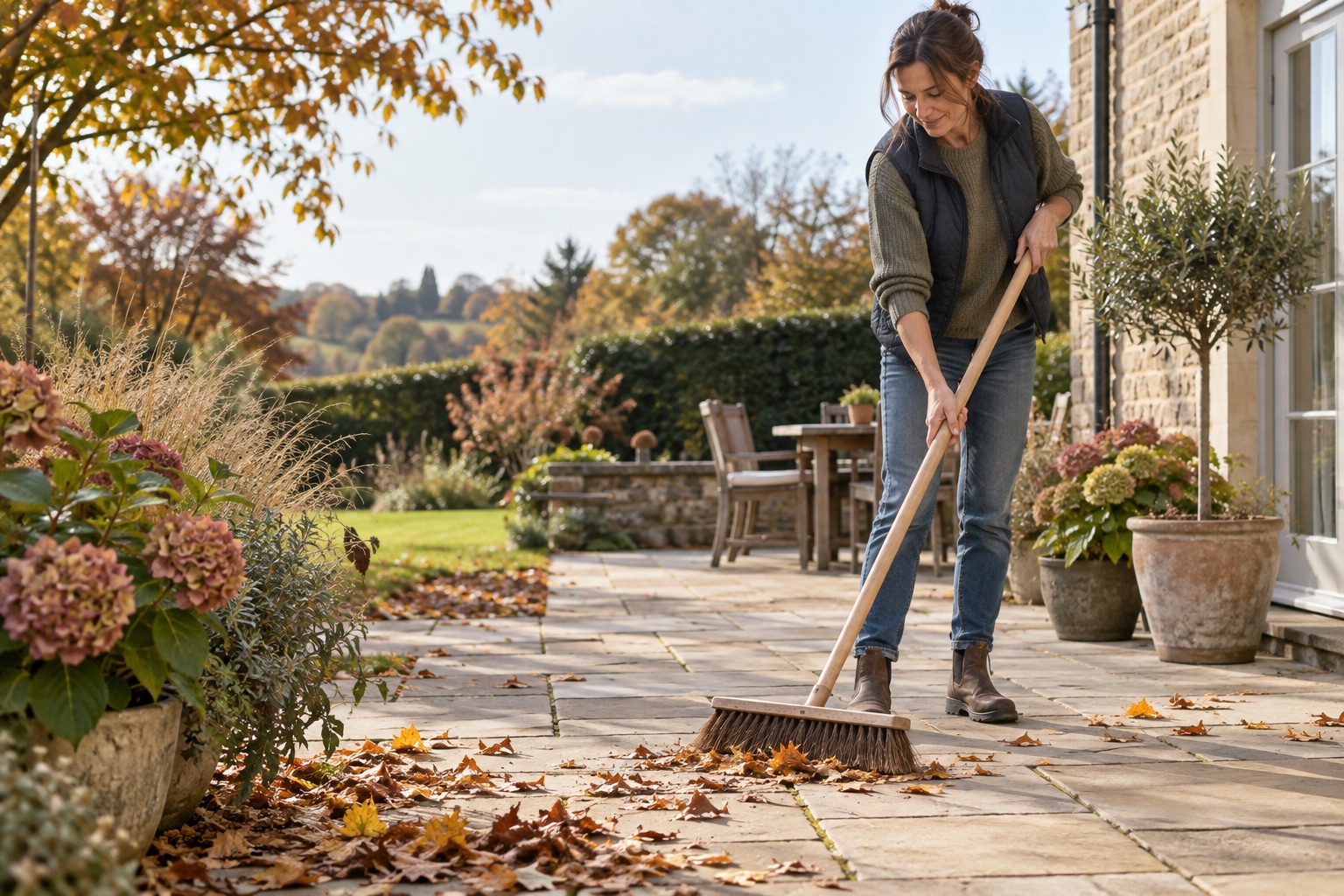
Light, frequent sweeping and occasional hand scrubbing often delay the need for another machine wash on robust paving.
 View product on Amazon
Newman and Cole Deck Scrubber Brush
Best for: Robust paving and sound timber that tolerate a stiff brush
A long-handled stiff brush for loosening surface dirt without a pressure washer. Test a small patch first; soft stone, delicate pointing and composite boards may need a gentler brush.
Use only where the surface maker permits firm brushing; protect joints and finishes.
- Stiff bristles
- Long handle
- Manual cleaning
- Test first
Condition before calendar
Build maintenance around what lands and grows on the patio
A sunny, free-draining porcelain patio may need little more than sweeping and an occasional wash. Shaded sandstone under trees may collect wet leaves and biological growth much faster. The best schedule is therefore a set of observation triggers rather than fixed pressure-washing dates.
Frequent light maintenance prevents grit being walked into the surface and removes organic matter before it holds moisture. A full clean should be a response to widespread dirt, not a ritual that repeatedly exposes stone and joints to unnecessary force.
| Task | Typical rhythm | Do it sooner when | Method |
|---|---|---|---|
| Sweep | Weekly or fortnightly in active seasons | Leaves or soil collect | Broad dry broom |
| Spot clean | As spills occur | Oil food or bird mess appears | Material-compatible local clean |
| Algae check | Monthly in damp shaded periods | Surface turns green or slick | Brush and diagnose moisture |
| General wash | Once or twice yearly as needed | Widespread grime remains | Detergent brush and rinse |
| Joint inspection | After winter and every deep clean | Cracks or loss appear | Repair with correct material |
Clean sooner when these signs appear
- The surface becomes green or slippery after rain.
- Leaves, compost or soil collect behind pots and furniture.
- A spill could penetrate or stain if left in place.
- Drainage channels block or water begins to pool.
- Black lichen spots are spreading across porous paving.
Restrict access immediately if the patio is slippery. Use the algae removal method rather than waiting for the next planned clean.
Let the paving change the frequency and method
Porcelain is low absorption and routine dirt generally releases easily. Sandstone and limestone benefit from prompt gentle cleaning so stains and growth are not attacked later with excessive force. Concrete is robust when sound, but weathered faces and coatings still need restraint.
Inspect pointing whenever you clean. Missing material, moving slabs or recurring pooling are repair or drainage problems, not reasons to wash more often.
For an occasional deeper clean
Compact machines suit maintenance better than overkill
The AVA Go P40 stores compactly and provides an eight-metre hose for small-to-medium areas. The Bosch UniversalAquatak 135 adds stronger maximum flow where rinsing speed matters. Neither should come out for every sweep or spill: use the least aggressive method that solves the job.
 View product on Amazon
AVA Go P40 Medium
Best for: Cars, bikes and smaller outdoor areas where storage space is tight
A genuinely compact 120-bar mains washer with an 8 m flexible hose and 390 l/h flow. The small body and stored accessories make it appealing for sheds, garages and mobile car-care setups.
What stands out
- Compact body with stored accessories
- 8 m flexible hose
- Ten-year warranty when registered under AVA's terms
Keep in mind
- No surface cleaner in the Medium bundle
- Lower flow than the mid-range corded leaders here
- 120 bar max
- 390 l/h
- 8 m hose
- Mains · 1.7 kW
 View product on Amazon
Bosch UniversalAquatak 135
Best for: Smaller homes wanting one compact machine with a multi-pattern nozzle
A compact 135-bar washer with a strong 450 l/h maximum flow and a practical three-in-one nozzle. It reduces attachment swapping for routine car, furniture and small-patio jobs.
What stands out
- 450 l/h maximum flow
- Three spray patterns in one nozzle
- 7.9 kg machine weight
Keep in mind
- No surface cleaner in the standard box
- The 7 m PVC hose is shorter and less flexible than some rivals
- 135 bar max
- 450 l/h
- 7 m hose
- Mains · 1.9 kW
If a machine clean is due, read how to pressure wash a patio safely and compare the best patio pressure washers.
A simple UK seasonal checklist
Spring
Clear winter debris, inspect frost damage and joints, then wash only the areas that need it. Treat early algae before outdoor use increases.
Summer
Spot-clean food and grease promptly, sweep grit and move planters occasionally. Avoid letting detergent dry in hot sun.
Autumn
Increase sweeping as leaves fall and keep channels clear. Wet leaves create both staining and slip risk.
Winter
Prioritise safe access and drainage. Avoid pressure washing before frost, and do not seal damp paving. Inspect after freeze-thaw weather.
Bradstone suggests sweeping every week or two as a useful way to reduce the need for deep cleaning, while the exact rhythm should follow conditions.
Frequently asked questions
Should I pressure wash my patio every year?
Not automatically. Use sweeping, spot cleaning and brushing first. Pressure wash only when the surface is suitable and widespread embedded dirt justifies it.
What is the best month to clean a patio in the UK?
Choose a mild, dry period without frost or intense sun. Surface condition and the cleaner’s weather instructions matter more than a named month.
How often should I sweep patio slabs?
Weekly or fortnightly is useful during active seasons, with extra sweeping after storms, leaf fall, gardening or muddy use.
How often should patio algae be treated?
Brush visible growth promptly. Use any treatment only at the frequency permitted by its label, while addressing shade, debris and standing water.
Does frequent cleaning damage paving?
Gentle sweeping is low impact, but repeated strong chemicals or pressure can wear finishes and joints. Match the method to the actual dirt.