
Polycarbonate greenhouse care
How to clean polycarbonate greenhouse panels
Wash polycarbonate greenhouse glazing without scratching UV-coated sheets. Choose soft cloths, mild detergent and safe access around twinwall channels.
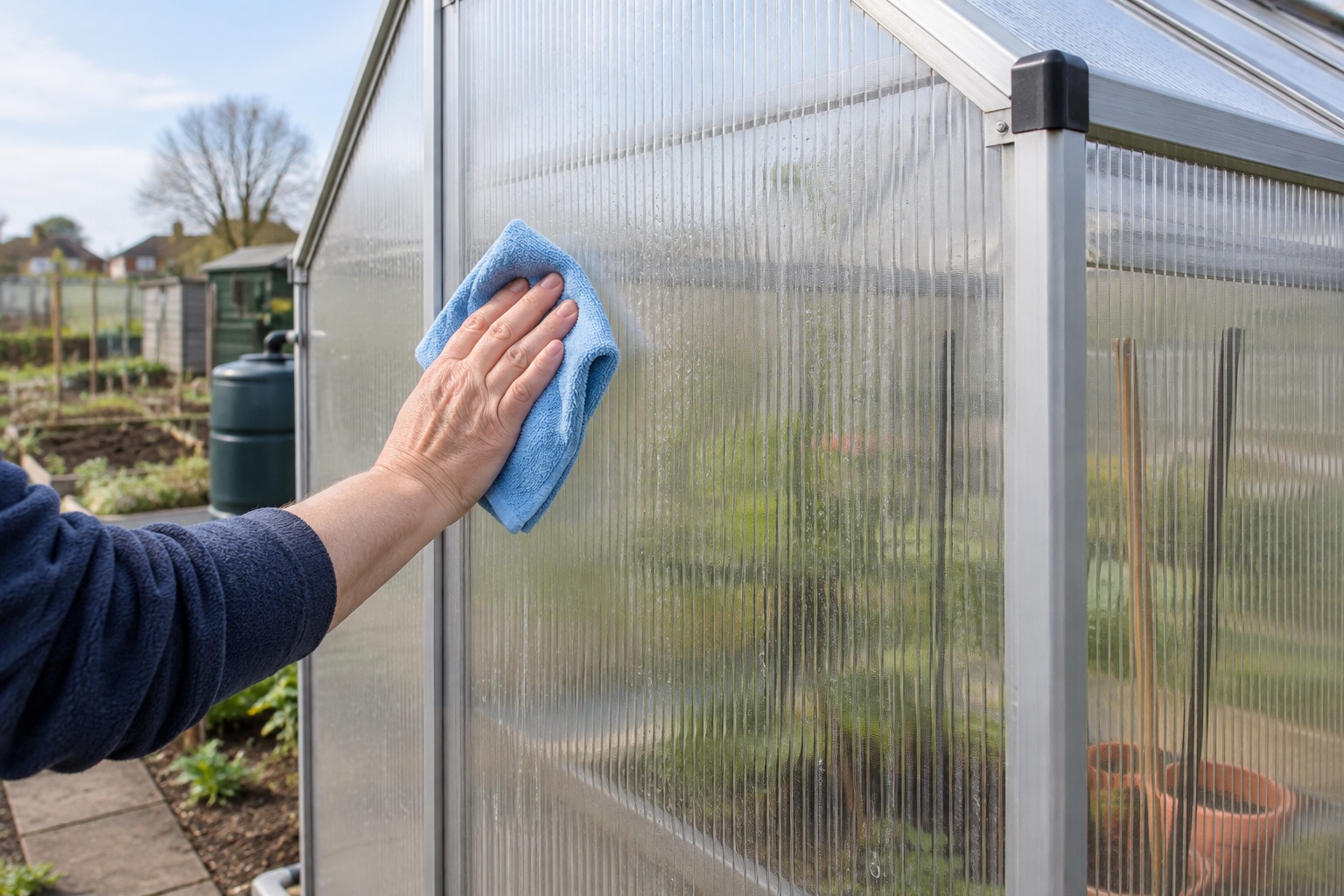
Know the sheet before applying a cleaner
Greenhouses may use solid or twinwall polycarbonate with a UV-protected exterior face. The sheet can look like glass from a distance, but its cleaning limits differ. Find the greenhouse and panel maker if possible; check the orientation of any protective coating, the age of seals and whether the edges are capped. Scratched or hazy glazing lets in less useful light and cannot always be polished back to its original finish.
Palram's polycarbonate guidance recommends warm water, mild detergent and a soft cloth, and warns against solvent cleaners and abrasive brushes. The precise sheet maker's instructions take priority over generic advice. If you have ordinary glass, use the whole-greenhouse guide instead.
How to wash polycarbonate panels
- Choose a cool, calm period and make sure the panel is reachable without leaning on it.
- Use a gentle water rinse to float off dust, pollen and grit before touching the surface.
- Test lukewarm water and a little maker-approved mild detergent in a discreet corner.
- Use a clean soft cloth or sponge with light strokes; change it whenever it picks up grit.
- Rinse residue fully with clean water and allow the sheet to air-dry.
- Clean nearby frame channels and gutters separately so grit does not wash back over the panel.
Never dry-wipe gritty glazing, scrape with a blade, use steel wool or spray high-pressure water into sheet edges. Avoid ammonia, strong solvents and high-alkaline products unless your exact panel maker explicitly approves them. Do not assume a greenhouse disinfectant is compatible with the UV face.
Cloudiness, algae and dirt between layers
External green film usually responds to a gentle rinse and repeat wash. Persistent cloudiness can be surface scratching, weathering or moisture inside twinwall channels; a stronger detergent will not necessarily fix it. If water has entered the channels, inspect edge tape and caps against the installation manual rather than drilling holes at random.
Avoid pressure washing seals to chase dirt from panel overlaps. It may push more water inside and loosen fixings. For high roof sheets, safe access is more important than completing every square metre in one session. Do not stand on glazing or reach beyond a stable working position.
Keep a clean, soft cloth dedicated to glazing
The cloth pack shown here is useful for controlled hand washing, provided each cloth is clean and grit-free. It is not a licence to dry-polish dusty polycarbonate. Always wet-rinse first and follow the panel maker's detergent guidance.
 View product on Amazon
Amazon Basics Microfibre Cleaning Cloths, 24-pack
Best for: Separate soft cloths for low-water cleaning and drying of accessible surfaces
A multipack of reusable microfibre cloths for controlled hand cleaning. Keep clean cloths separate by task, and never drag grit across paint or electrical contacts.
Useful for careful wiping, not a substitute for a paint-safe wash mitt on gritty car bodywork.
- 24 cloths
- 40.5 × 30.5 cm
- Reusable
- Keep grit separate
Frequently asked questions
Can I use vinegar on polycarbonate?
Do not improvise a cleaner. Use the sheet maker's approved mild detergent and rinse thoroughly.
Can I pressure wash polycarbonate panels?
It is best avoided. Pressure can harm coatings, seals and twinwall edges.
Why are my panels still cloudy after cleaning?
The cause may be scratches, ageing or moisture inside the channels rather than surface dirt.
Is microfibre safe on polycarbonate?
A clean soft cloth can be suitable, but rinse grit away first and use little pressure.
How do I clean dirt inside twinwall sheets?
Inspect the manufacturer's edge-sealing system. Cleaning the outer face will not reach a contaminated internal channel.