
Garden tool care
How to clean garden tools
Clean spades, forks, secateurs and pruning tools safely. Remove soil and sap, dry metal, disinfect after disease and store tools to reduce rust.
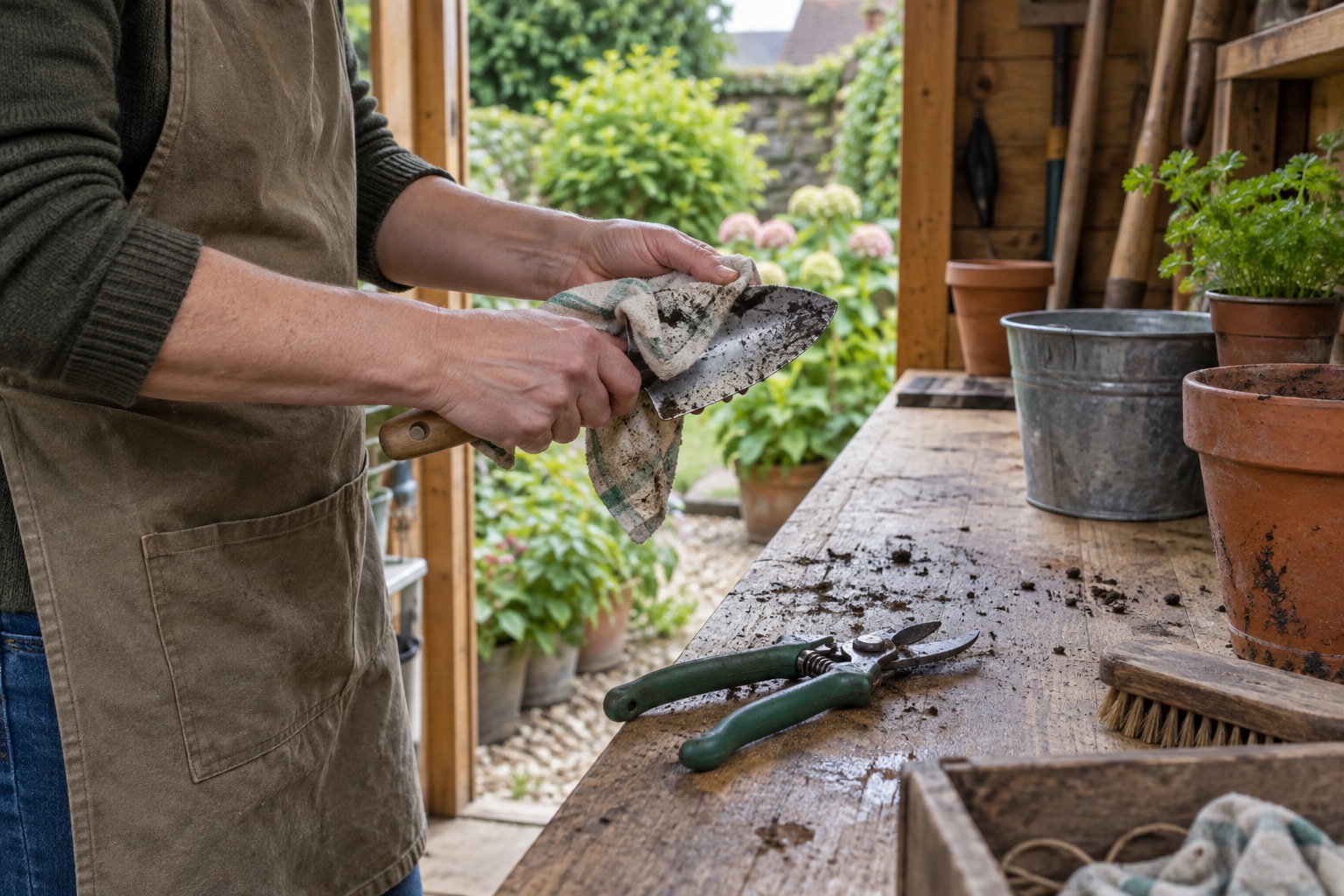
Clean spades, forks and trowels after use
Fresh soil is easier to remove than a dried clay crust. Scrape heavy mud back onto the bed, then brush the head and the junction with the handle. A hose is reasonable for stubborn soil on robust tools, but avoid soaking wooden handles or leaving water inside a hollow shaft. Wipe every part dry before it goes into a cupboard or shed.
The RHS guide to cleaning hand tools recommends regular brushing, drying and a thin oil film on appropriate metal. Stainless steel usually needs less rust protection than carbon steel, but it still benefits from a clean, dry storage space. Check for a loose head or split handle while the tool is in your hands.
- Put on gloves and remove stones and compacted soil without scraping towards your hand.
- Brush the blade, tines, socket and handle. Wash only where brushing is insufficient.
- Dry with a dedicated cloth, paying attention to joints and the underside of a spade blade.
- Inspect rivets, screws and handles; repair or retire an unsafe tool.
- Store off the ground where air can circulate and rain cannot reach the metal.
Give secateurs and pruning saws a separate hygiene routine
Sap and plant debris can prevent blades closing cleanly and can carry disease between plants. Brush or wipe away debris first; a disinfectant cannot reliably reach a dirty blade. If you have cut suspect growth, follow the disinfectant label for dilution, full contact time and wiping or rinsing. The RHS specifically highlights disinfection after contact with contaminated material. Keep liquid out of powered-tool housings and follow the tool manual for dismantling.
Once clean and dry, check the spring and pivot. A tiny amount of suitable oil at the pivot may help movement; wipe away excess so it does not collect grit. Never wipe across a cutting edge with bare fingers. Sharpening is a separate task, and badly chipped blades may need replacing rather than more force.
Prevent rust without leaving oily handles
Light surface rust on an uncoated steel blade may be removable with a tool-approved abrasive and careful handling. Deep pitting, a weakened socket or a cracked head is a safety issue. Dry the metal and apply a very thin film of tool oil if recommended; keep gripping surfaces and food-growing contact points free of excess oil. Hang tools rather than leaning wet heads against a shed wall.
A pressure washer is rarely useful here: it can force water into pivots, handles and electrical components. Controlled hand cleaning is quicker to dry and easier to inspect. For equipment stored nearby, see our shed-exterior guide.
Useful products for tool cleaning and care
Burgon & Ball oil is aftercare for suitable dry metal. Agralan Citrox is for label-approved hygiene after physical cleaning; it is not a substitute for removing soil. Keep separate cloths for dirty tools and furniture, and follow every product's current directions.
 View product on Amazon
Burgon & Ball Garden Tool Oil 125ml
Best for: A thin protective film on clean, dry carbon-steel garden tools
A small bottle of tool oil for the final wipe after removing soil and moisture. Follow the tool maker's advice, keep oil off grips and wipe excess away.
Aftercare for appropriate metal tools, not a cleaner or disinfectant.
- 125 ml
- Tool aftercare
- Apply sparingly
- Dry tools first
 View product on Amazon
Agralan Citrox Ready To Use 750ml
Best for: Label-approved greenhouse fixtures and garden-tool hygiene after physical cleaning
A ready-to-use citrus-based garden disinfectant for hygiene tasks where its label and the material maker permit it. Remove dirt first and follow the full contact-time and rinse instructions.
Use only on labelled surfaces; do not assume it is safe on every polycarbonate sheet, plant or coating.
- 750 ml
- Ready to use
- Hygiene follow-up
- Follow label
 View product on Amazon
Amazon Basics Microfibre Cleaning Cloths, 24-pack
Best for: Separate soft cloths for low-water cleaning and drying of accessible surfaces
A multipack of reusable microfibre cloths for controlled hand cleaning. Keep clean cloths separate by task, and never drag grit across paint or electrical contacts.
Useful for careful wiping, not a substitute for a paint-safe wash mitt on gritty car bodywork.
- 24 cloths
- 40.5 × 30.5 cm
- Reusable
- Keep grit separate
Frequently asked questions
Should I clean garden tools after every use?
Brush off soil and plant debris after each use. A deeper wash is only needed when material remains stuck or disease hygiene requires it.
Can I wash secateurs under a tap?
Check the maker's instructions. A controlled wipe is safer around pivots and springs than soaking; dry promptly and lubricate only approved points.
When should I disinfect pruning tools?
After cutting diseased material and whenever a plant-health risk calls for it. Remove debris first, then follow the disinfectant's contact time.
What stops a spade from rusting?
Removing wet soil, drying the blade, using a light suitable oil film and storing it in a dry ventilated place all help.
Can I pressure wash my garden tools?
It is generally unnecessary and may drive water into joints or powered components. Brush and hand-wash instead.